
Protective Gear for Repotting Caudex Plants
Choose goggles, gloves, handling tools, and clean cutters for a sappy or spiny caudex repot, without buying gear your plant does not require.
Maya Ellison · 2026-07-22 · Updated 2026-08-06 · 15 min read

Key Takeaways
- Match the protective gear to the hazard rather than buying one universal repotting kit. A smooth, spineless plant needs far less than a latex-producing Euphorbia or a heavily spined Pachypodium.
- For sap, use splash-rated (D3) goggles and disposable nitrile gloves, with rinse water ready before you start. Leather alone is not a sap barrier.
- For spines, handle with a tool or wrap-and-cradle method first, and treat a long leather glove only as backup. No glove makes direct gripping a good method.
- If you cut roots or stems, use a clean, sharp bypass tool, cleaned then disinfected. Sulfur dust is not part of the core kit, and the linked product is not labeled as a caudex wound dressing.
- Keep the kit proportional. The safest shopping list is often shorter than a generic repotting kit. The distinction is whether the job exposes you to sap, spines, a cutting edge, or some combination.
Seek medical or veterinary advice for an actual injury or exposure. Keep a practical pre-repot checklist and current first-aid contacts close at hand if prevention fails.
What Gear Does Your Repot Actually Need?
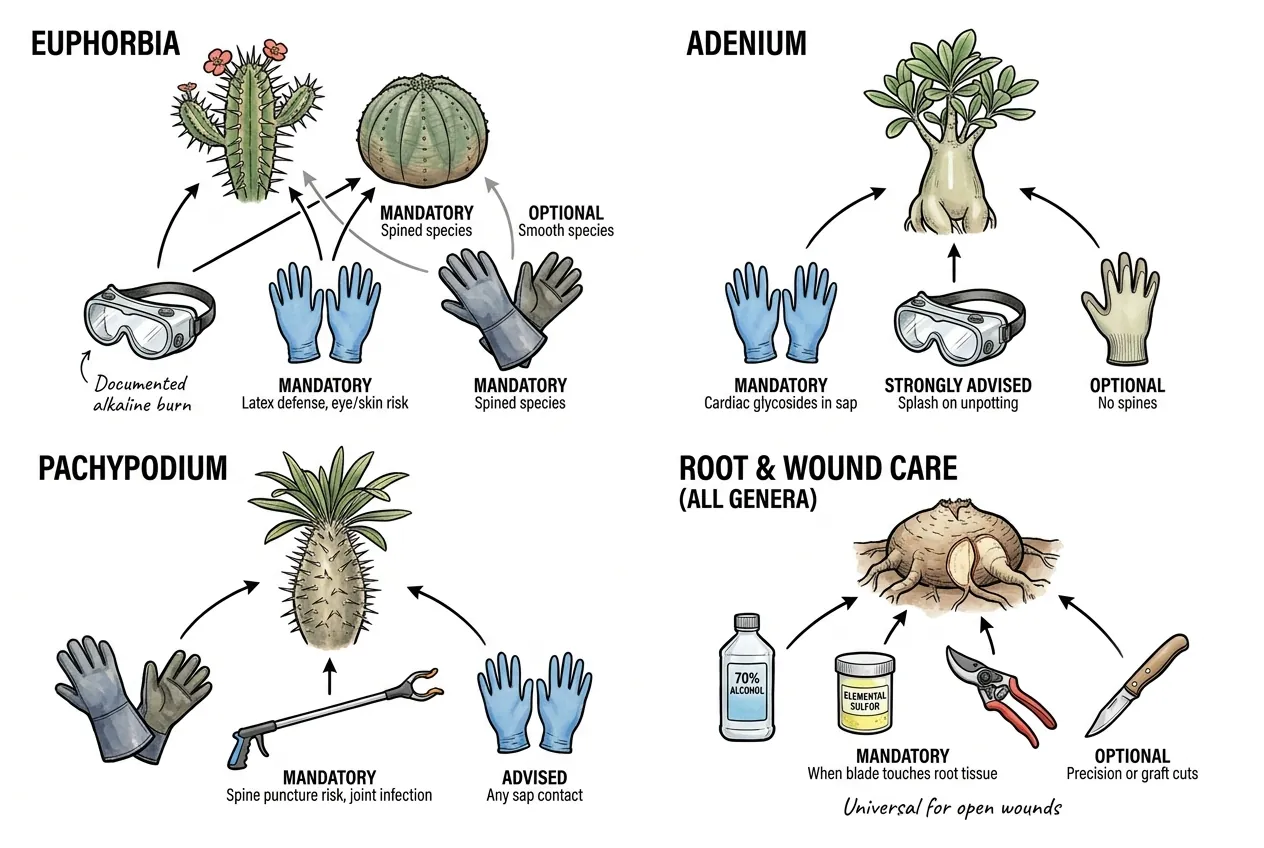
| Plant and task | Core protection | Conditional item | Usually skip |
|---|---|---|---|
| Smooth, non-latex plant. Slide from pot only | Clean bench and ordinary hand washing | Gloves if skin is broken or the plant’s toxicity is uncertain | Gauntlet, root hook, knife, sulfur |
| Euphorbia with a stem or root that may release latex | Splash goggles, disposable nitrile, covered skin | Face shield over goggles for a large pressurized cut | Leather alone as a sap barrier |
| Adenium during cutting or grafting | Eye protection, disposable nitrile, clean cutting tool | Precision knife only for a controlled graft cut | Gauntlet when the plant is spineless |
| Spiny Pachypodium or cactus during moving and repotting | Tongs or wrap-and-cradle handling | Long leather glove as a secondary barrier | Root hook as a hoist |
| Root or stem pruning | Clean, sharp bypass pruner sized for the cut | Label-directed disinfectant after debris is removed | Anvil pruner on live tissue. Unlabeled wound powders |
If you already own suitable goggles, gloves, and a sharp bypass pruner, use them. Brand names are secondary to the visible rating, fit, condition, and suitability for the job.
The product shortlist at a glance
| Item | What it is for | Buy when | Skip when |
|---|---|---|---|
| 3M GoggleGear 500 | Sap splash protection | The exact product is GG501SGAF and carries D3 splash marking | You already have intact, well-fitting D3 goggles |
| GLOVEWORKS 8 mil nitrile gloves | Disposable short-contact sap barrier | You need a latex-free glove with a textured grip | You expect it to stop spines or remain protective after a tear |
| Acdyion long leather gloves | Abrasion and incidental spine backup | A long cuff and thick leather fit your spiny-plant task | You need a certified puncture rating or a liquid barrier |
| KAKURI bonsai root hook | Teasing compacted roots | You can use it without levering or lifting the plant | You mainly need to move a large, spiny caudex |
| 70% isopropyl alcohol | Pruning-tool disinfection after cleaning | The current listing and bottle both state 70% isopropyl alcohol | You already own an appropriate tool disinfectant |
| Fiskars Softgrip bypass pruner | Clean cuts on suitable live stems and roots | The cut is within its 5/8-inch capacity | You need fine graft control or a larger cutting tool |
| Zenport K106F grafting knife | Optional precision graft cuts | You know the technique and can control the exposed blade | You are only unpotting or trimming ordinary roots |
| Bonide Sulfur Plant Fungicide | Labeled fungal and mite uses, not caudex wound dressing | The current label authorizes your actual pest or disease use | You want a powder to put on a fresh caudex cut |
Why Do Sap and Spines Need Different Controls?
Separate Sap, Spine, and Cutting Hazards
Euphorbia latex can irritate skin, eyes, and mouth. Ocular exposure can range from redness and blurred vision to serious keratitis. The National Capital Poison Center advises covering skin and wearing eye protection when working closely with the genus.
Adenium obesum contains cardiac glycosides and is hazardous if ingested. That does not prove that intact-skin contact produces systemic poisoning. Gloves are still sensible because they reduce skin contact and make it less likely that sap moves from fingers to the eyes or mouth.
A spine creates a mechanical puncture. The common outcome is a small wound, but a retained plant fragment can produce delayed inflammation, and a soil-contaminated puncture can become infected. No glove makes direct gripping a good handling method.
What can Euphorbia latex do to an eye?
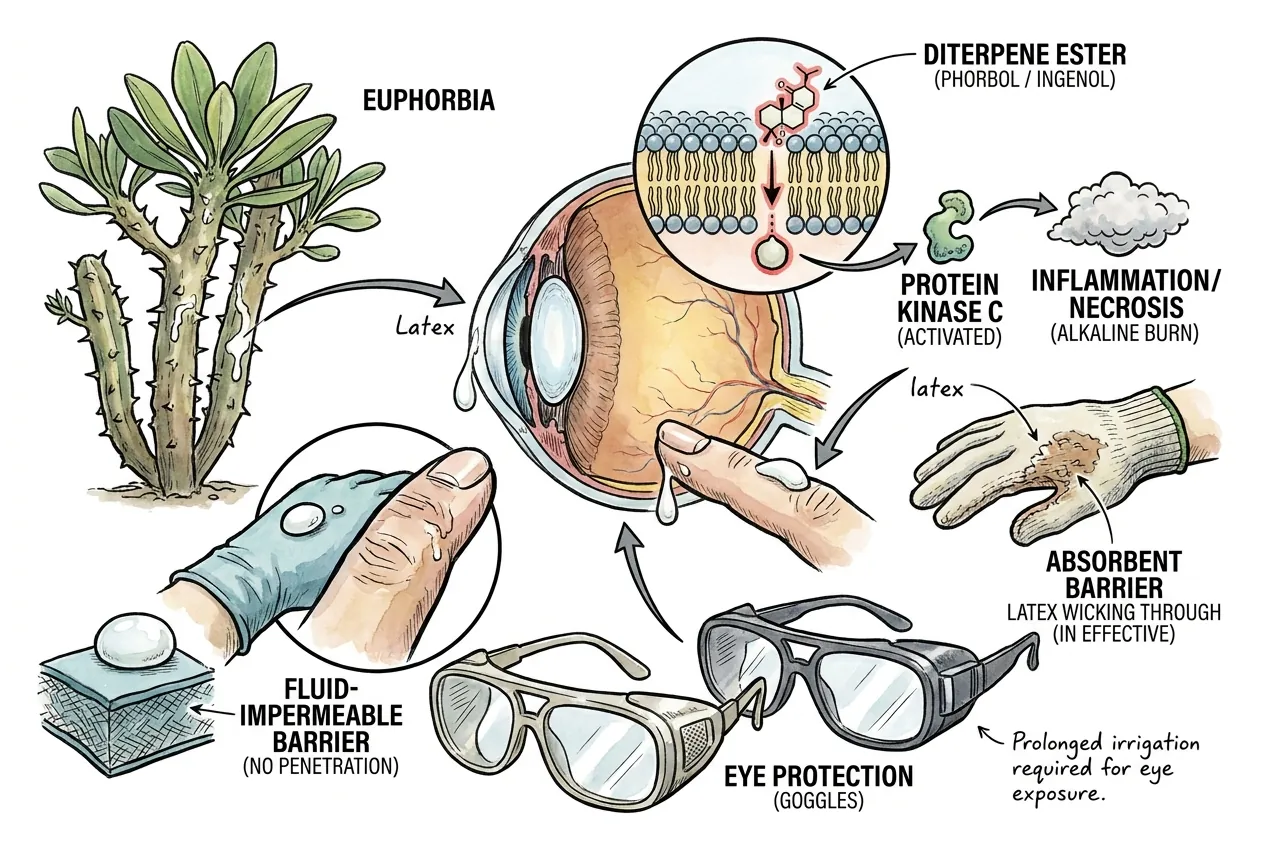
A published case measured an ocular pH of 9 after Euphorbia lathyris exposure. Irrigation was required to return it toward neutral. Other case reports describe severe corneal inflammation. These reports show what can happen, not what every exposure will do.
Prevent the splash, then irrigate immediately
A pair of open impact glasses leaves gaps around the eye. A goggle marked D3 is designed for droplet and splash protection.
Why should you avoid gripping a spiny plant?
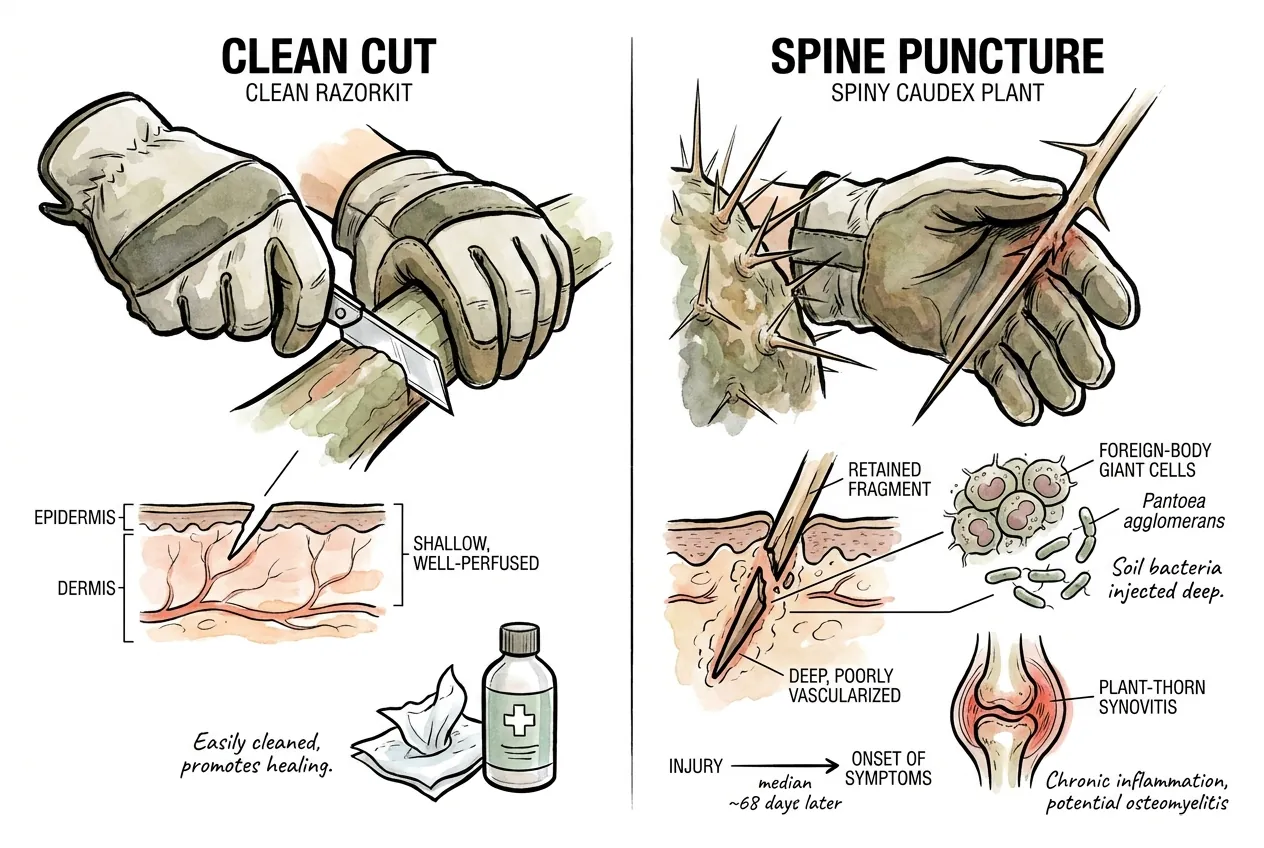
The problem is not that every spine carries a special pathogen. It is that a narrow puncture can leave plant material and soil deep in tissue, sometimes near a tendon or joint. Symptoms from a retained fragment may appear well after the original repot.
Keep hands away from spiny tissue
Use tongs, folded corrugated cardboard, or another wrap-and-cradle method that supports the plant without squeezing it. For a heavy specimen, use two people. A leather glove is the backup in case a spine brushes the hand. It is not permission to grab the plant.
Which Eye and Hand Protection Specs Matter?
For sap use a D3-marked goggle
The exact 3M GoggleGear 500 model worth considering here is GG501SGAF. 3M currently lists it as indirectly vented, D3 droplet-and-splash rated, D4 dust rated, and compliant with the impact-rated protector requirement in ANSI/ISEA Z87.1-2020.
Confirm the model and markings on the item you receive. An Amazon ASIN can accumulate variant sellers or pack sizes. Check that the frame seals comfortably around your face and does not create a gap over prescription temples. A face shield can add face coverage for a large sap-heavy cut, but it does not replace the goggle underneath.
Skip this purchase if you already have an intact, comfortable D3 goggle. You are buying a rating and fit, not a logo.
For sap use disposable nitrile changed promptly
GLOVEWORKS currently identifies its orange GWON glove as 8 mil, latex-free, powder-free, and textured for wet grip. Those are useful handling features. They do not establish a verified permeation time for Euphorbia latex or Adenium sap.
Treat any disposable nitrile glove as a short-contact barrier. Choose the correct size, inspect it before use, replace it after visible sap contact, and discard it immediately if torn or punctured. Do not put a contaminated disposable glove back on.
Thickness can improve durability at the cost of touch. An 8 mil glove suits rough unpotting. A thinner reputable nitrile glove may give better control for fine roots. Neither is spine protection.
For spines use leather as backup, not a guarantee
The Acdyion long leather glove may provide useful cuff coverage and abrasion resistance, but the listing does not establish an independent EN 388 puncture score. Treat thorn-proof as marketing unless the exact product provides a test standard and result.
Buy it if the fit, leather condition, and long cuff make sense as secondary protection. Skip it if you need certified puncture performance, or if the plant is spineless. Leather is porous and should never be the only barrier between sap and skin.
How Should You Handle a Spiny Caudex?
A root hook and a lifting tool are not interchangeable. The KAKURI root hook can tease compacted medium and separate roots while your other hand stays away from the crown. Do not suspend a heavy caudex from one root or use the hook as a lever against soft tissue.
For the actual lift, University of Arizona Extension recommends metal tongs and heavy leather gloves for cacti. It also describes wrap methods for larger plants. Support weight from underneath and use a second person when the mass or pot makes control uncertain.
Skip the hook if the root ball is already loose or your main problem is moving the plant. In that case, spend on a suitable handling method rather than a bonsai tool you do not need.
How Should You Clean Tools and Make a Cut?
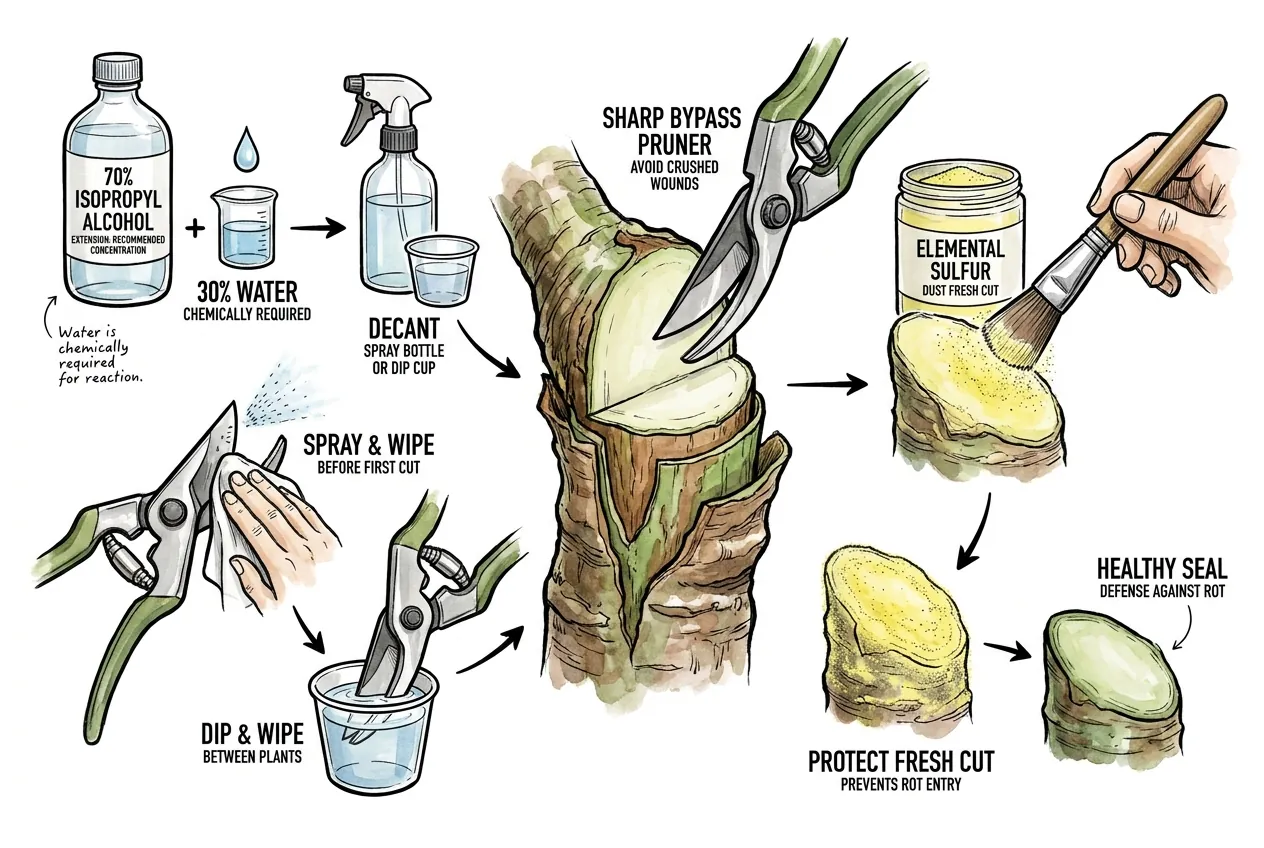
- Remove soil, dried sap, and plant debris from the blade first.
- Wipe or dip the clean tool in 70% isopropyl alcohol. Iowa State Extension says no prolonged soak is needed.
- Let flammable alcohol clear before cutting and keep it away from ignition sources.
- Use a sharp bypass blade within its stated capacity. Do not force a small pruner through a large caudex.
- Disinfect between plants and after cutting visibly diseased tissue. Between each cut is the conservative option when disease is suspected.
Amazon Basics 70% isopropyl alcohol is one convenient option if the current bottle and listing still match. Any reputable 70% isopropyl product can do the same job. Alcohol reduces contamination. It does not sterilize a dirty blade or reliably control every plant pathogen.
Fiskars Softgrip bypass pruner is a reasonable ordinary-cut option. Fiskars lists a hardened precision-ground blade and maximum 5/8-inch cutting capacity. The optional Zenport grafting knife belongs only in a controlled precision-cut workflow. It is unnecessary for a basic repot.
Why sulfur is not in the core wound kit
Bonide Sulfur Plant Fungicide is an EPA-registered pesticide. The current label lists particular fungal, mite, crop, and ornamental uses. It does not instruct users to dust fresh caudex wounds. The label also says using the pesticide inconsistently with its directions violates federal law.
Do not turn a grower habit into a recommendation the label does not support. Make a clean cut, keep it protected from contamination and excess moisture, and follow species-appropriate aftercare. The interval before watering depends on the wound, roots, plant condition, temperature, and substrate, not one universal number of days.
How Do You Run the Repot Safely?
Work in hazard order. Identify the hazard, protect yourself, support the plant, cut only if needed, then clean up before removing eye protection.
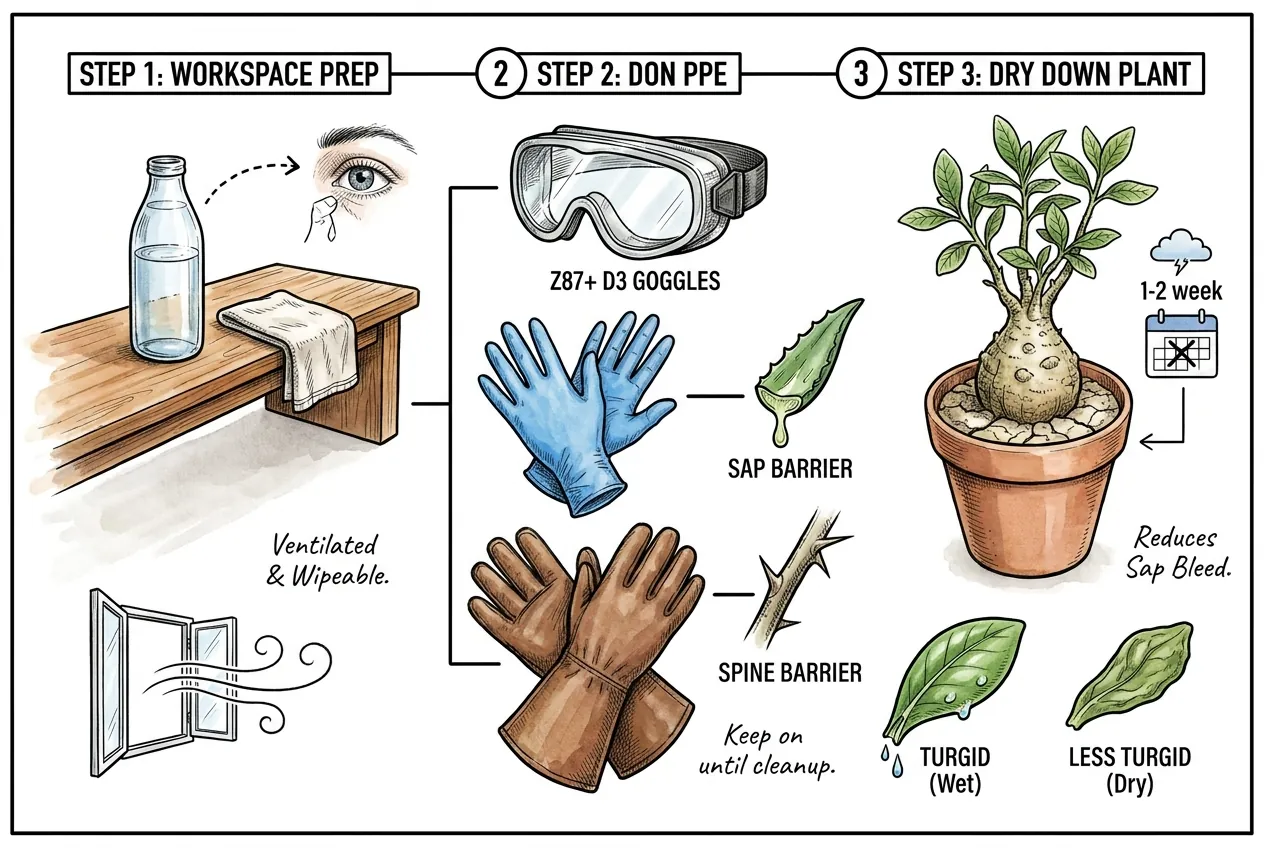
- Identify the plant and task. Confirm whether the genus produces irritating or toxic sap, whether spines are present, and whether you truly need to cut.
- Prepare the work area. Use a stable, wipeable, well-lit surface away from children and pets. Put clean rinse water within reach before opening the pot.
- Let the substrate become workable. A drier mix is usually easier to remove, but do not impose a one- or two-week drought on every species, seedling, or actively growing plant.
- Put on task-specific protection. Check the goggle seal and glove condition. Layer nitrile under leather only when the plant is both sappy and spiny.
- Support rather than squeeze. Use tongs or a wrap for the plant’s weight and a root hook only for careful root teasing.
- Cut only when necessary. Clean and disinfect the correctly sized tool, remove compromised tissue deliberately, and avoid touching your face.
- Use species- and wound-appropriate aftercare. Keep fresh wounds clean and avoid premature saturation, but watch the plant instead of following a rigid callus countdown.
- Clean up before removing eye protection. Bag hazardous debris, wipe the bench and reusable gear as directed, peel disposable gloves off without touching the contaminated exterior, and wash your hands.
If substrate choice is the next decision, use the caudex substrate comparison. If cutting is part of an Adenium graft rather than an ordinary repot, follow the separate Adenium grafting workflow.
What Should You Do After Sap or a Spine Exposure?
Eye exposure
Start rinsing immediately with plenty of room-temperature water. Remove contact lenses and continue for at least 15–20 minutes. Do not put soap in the eye. Then use webPOISONCONTROL or call Poison Control in the United States at 1-800-222-1222. Severe symptoms need emergency care after irrigation. Persistent pain, redness, swelling, tearing, or visual change needs an urgent eye examination.
Skin exposure
Remove contaminated clothing and wash the skin with running water and mild soap. Get expert guidance for blistering, a large exposure, worsening pain, or persistent redness or swelling.
Swallowed plant material
Do not induce vomiting. Contact Poison Control for a person. For a pet, call your veterinarian or ASPCA Poison Control at 888-426-4435. The service is available around the clock and a consultation fee may apply.
Spine puncture
Clean the wound and remove loose surface dirt. Seek medical care for a deep wound, suspected retained fragment, injury near a joint or tendon, loss of function, or increasing pain, warmth, redness, swelling, drainage, or fever. Tell the clinician that the injury involved a plant spine and potting soil.
CDC classifies puncture wounds and wounds containing soil as dirty or major wounds for tetanus assessment. A clinician should review vaccination status when the primary series is incomplete or unknown, or when five or more years have passed since the last tetanus vaccine. If the full series is complete and the last dose was less than five years ago, CDC says another dose is not needed for wound management.
Call emergency services immediately if the exposed person collapses, has a seizure, has trouble breathing, or cannot be awakened. The phone numbers above are US-specific. Use local poison, veterinary, and emergency services elsewhere.
Who Can Skip Most of This Kit?
- Skip the leather gauntlet for a smooth, spineless plant. It reduces dexterity and adds no fluid barrier.
- Skip the root hook when the root ball is loose or you only need a safe lifting method.
- Skip the grafting knife unless the task requires a precision graft cut and you can control the blade.
- Skip a new pruner if the one you own is sharp, clean, bypass-style, and correctly sized.
- Skip sulfur as wound dressing. The linked product’s label does not make that use part of the core protocol.
- Do not skip splash protection by substituting open impact glasses when latex can be released. D3 is a separate splash designation.
The false economy is buying a product category without checking the job. Open glasses are not cheaper D3 goggles. A root hook is not cheaper lifting tongs. A thorn-proof name is not an independent puncture test.
When Should You Replace Protective Gear?
Replace Gear After Contamination or Damage
Replace disposable nitrile after the session, visible sap contact, or any tear or puncture. Inspect reusable leather before each repot and retire it when spines are embedded, seams open, or the palm becomes thin or cracked.
Clean goggles according to the manufacturer’s instructions. Replace them when the seal, strap, lens, or ventilation structure is damaged enough to affect fit or vision. A fogged goggle should be corrected or replaced, not lifted off the eyes while leaning over the plant.
Clean and dry cutting tools after use, maintain the edge, and store alcohol in its labeled container away from heat and flame. Recheck product labels and ratings when replacing any item. Listings and formulations can change.
On my work surface, I keep unopened protection and disinfected tools away from used material. Before I begin, I make sure the water, waste container, and phone are reachable without carrying sap or soil across the work area.
This small layout has helped me avoid touching a clean handle with a contaminated glove. At the end, I clear the dirty side first and count the blades and tools before I leave the bench.
Frequently Asked Questions
Do I need goggles for a small Euphorbia?
If the task can release latex near your face, eye protection is prudent regardless of plant size. A D3-marked goggle provides splash coverage that open safety glasses do not.
Does Z87 mean a pair of glasses is splash-rated?
No. Impact protection and splash protection are different claims. For the 3M model discussed here, D3 is the relevant droplet-and-splash designation. Confirm the marking on the exact product.
Can I use household rubber gloves?
An intact nonporous glove may reduce brief skin contact, but the material, fit, chemical compatibility, and condition vary. Disposable nitrile is easier to replace after contamination. Neither option protects against spines.
How often should I change nitrile gloves?
Change them after visible sap contact, a tear or puncture, and at the end of the session. There is no verified safe breakthrough time for the plant saps discussed here.
Are Adenium and Euphorbia dangerous to pets?
Yes. ASPCA lists Adenium obesum as toxic because of cardiac glycosides and Euphorbia tirucalli as toxic because of irritating sap. Keep cuttings, runoff, tools, and plants out of reach. PPE worn by a person does not protect a pet.
Should I disinfect a blade when cutting one plant?
Start with a clean, disinfected blade. Remove debris before using alcohol. If tissue appears diseased, disinfect after that cut before moving to healthy tissue or another plant.
Affiliate Disclosure
This article contains Amazon affiliate links. As an Amazon Associate I earn from qualifying purchases. If you use these links, the site may earn a commission at no extra cost to you. Product availability, price, and specifications can change. Check the current listing before buying.