
Caudex Plant Smuggling: Assess Provenance and Avoid Poached Plants
How to assess caudex plant provenance, understand documentation and conservation risks, and choose traceable nursery-propagated stock.
Derek Kim · 2026-02-06 · Updated 2026-05-01 · 7 min read

Key Takeaways
- Illegal origin or false paperwork, not the bare-root format itself, is what makes a plant contraband. Wild collection can severely injure mature caudex plants, and some documented seizures report heavy losses.
- Verify CITES and permit paperwork with the issuing authority, because valid-looking documents can be misapplied. Routes and documentation problems vary by species, country, and shipment.
- Asymmetry, deep scars, and a flat calloused base with few feeder roots justify asking for records, but none proves wild origin. Cultivated plants can be stressed, and wild plants can be cosmetically restored.
- Under the US Lacey Act, plants can be seized even when the buyer says they did not know. Criminal liability and due-care standards depend on the facts, so keep your records.
- Choose documented nursery-propagated stock whose source and shipment records a seller can explain. It is the lower-risk, more traceable path.
A rare-plant listing can hide a complex provenance history. Behind photos of Stephania and Pachypodium gracilius may be a lawful nursery chain, a wild-sourced shipment, or a documentation problem.
Check what the seller can document, recognize what visual signs cannot prove, and make the purchase decision from that evidence.
What Does Bare-Root Format Tell You?
Bare roots are not a sign of smuggling by themselves.
Many import pathways restrict soil and growing media for plant-health reasons, but the current requirements depend on the country, species, and permit. Check the relevant authority rather than treating a soil-free root ball as suspicious by default.
Illegality can involve an unlawful wild origin, missing or fraudulent paperwork, false declarations, or deliberate mislabeling.
A label or package format cannot establish legality. The shipment and applicable law must be checked.
Why Does Bare-Root Format Not Prove Smuggling?
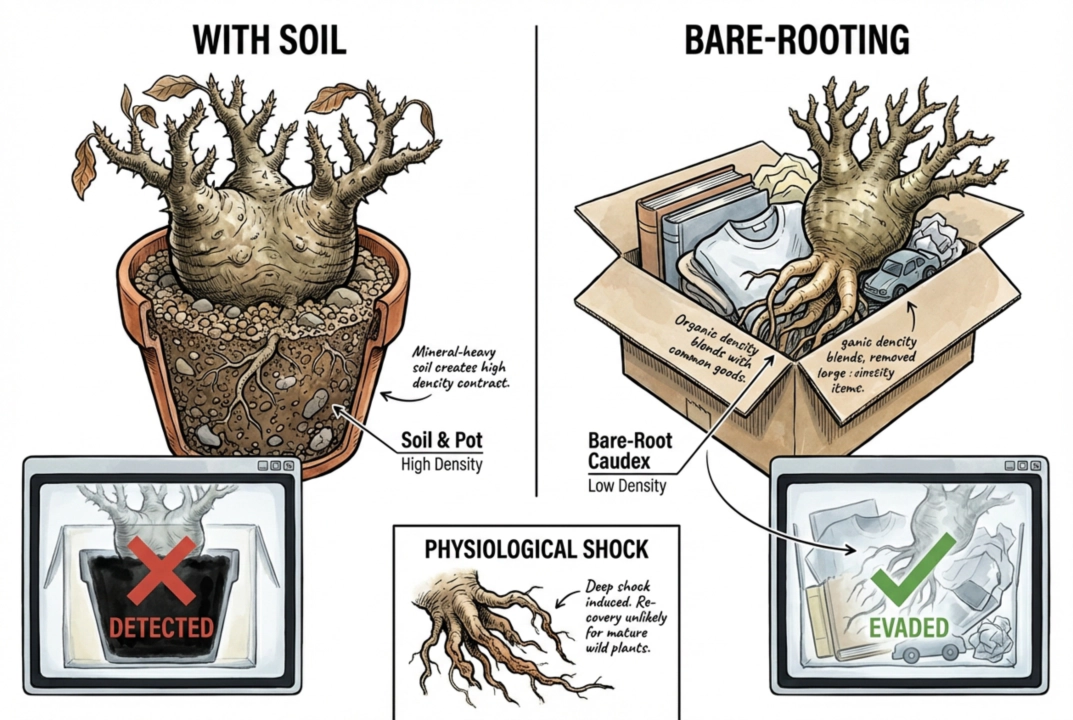
Claims that bare-root packaging is designed to defeat scanners are not a reliable way to assess a shipment.
Detection and enforcement can involve declarations, records, inspection, and species expertise. The technology and procedure vary by jurisdiction.
For a buyer, the practical signal is not a simple soil-free-equals-smuggled rule.
Check whether the origin, declarations, and required documents are coherent. An unlabeled or mislabeled overseas shipment with missing plant-health, import, or CITES records warrants stopping the transaction and checking the relevant authority. Legitimate imports can also be bare-root.
Why Can Some of These Plants Die?
Some roughly collected wild plants die because removing a mature plant and cutting its roots or lower stem can cause severe injury that it may not recover from.
The damage can occur before the plant ever reaches a shelf.
Post-seizure reports show substantial mortality among some confiscated wild succulents, but those figures come from mixed species and stressful holding conditions, so they do not predict the outcome for every home plant.
Fine roots and root tips do most of the water absorption. A plant that has lost much of its functional root system may need to regrow roots before it can use water normally.
A wounded plant may coast for months on stored water and even push out leaves, so leaves alone do not prove recovery.
New roots and stable tissue are more informative, while a softening or hollow base can indicate advanced decline.
Can You Save a Poached Plant?
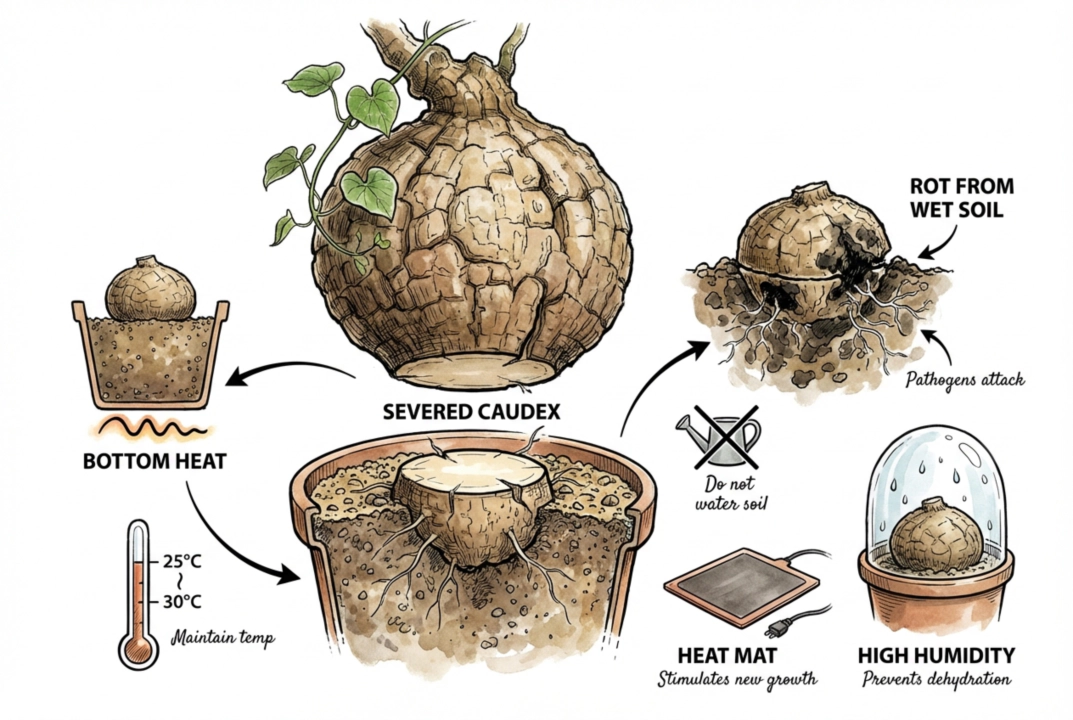
Sometimes, but it's often difficult, and the odds vary a lot by species and how badly the plant was cut.
Manage expectations before you try, and note that a taproot-severed Adenia, Stephania, and Pachypodium won't all respond to the same protocol.
In general, avoiding prolonged saturation is safer than repeatedly soaking a rootless, wounded base.
Do not apply a generic rescue recipe. Inspect the tissue, isolate the plant as appropriate, and seek species-specific or qualified horticultural guidance before cutting or watering.
What Documentation Problems Can Occur Across a Supply Chain?
Documented investigations have described collection in source regions, consolidation through trading hubs, and mixing of claimed nursery stock with plants of uncertain origin.
Routes, actors, and findings vary, so do not assign one pipeline to every species or country.
Fraud can involve misrepresenting propagation status, origin, or the relationship between a permit and a shipment.
A document alone is not proof that the specific plants were lawfully propagated, so verify records with the issuing authority when provenance matters.
What is permit laundering?
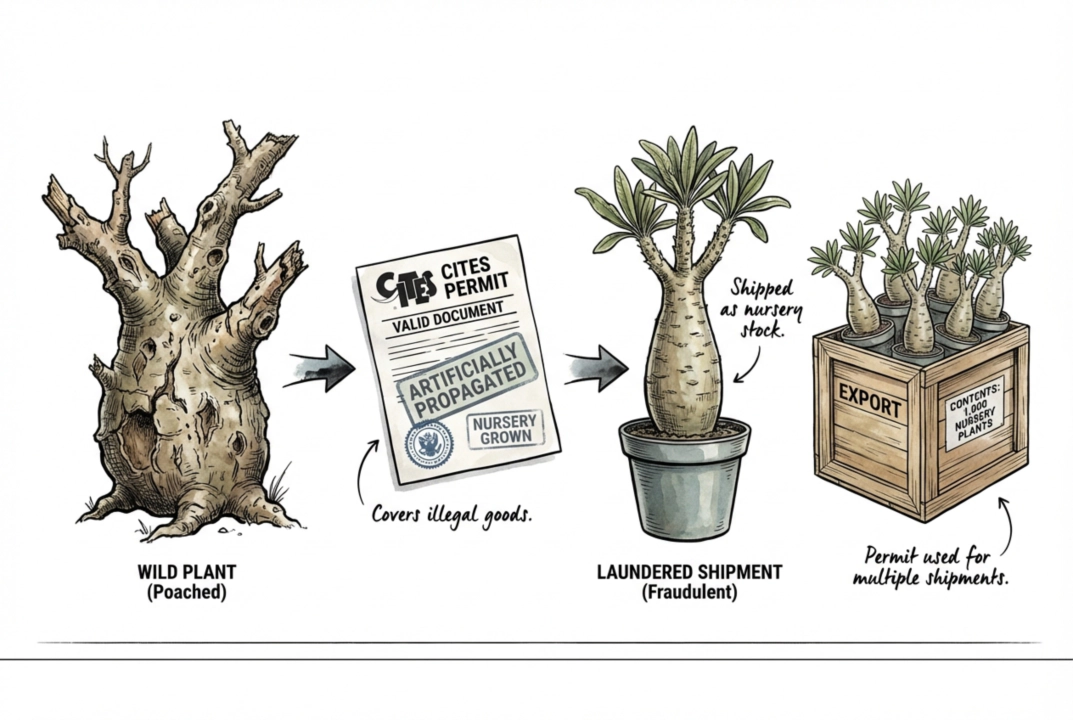
Permit laundering is a shorthand for using valid-looking documentation to obscure the origin or identity of goods.
The document may be genuine while the specific plants or shipment do not match it.
Because documentation may not reveal every biological or provenance mismatch at the border, enforcement guidance emphasizes cross-checking permits, shipment details, and botanical identification.
When records do not align, pause the transaction and ask the issuing or importing authority.
Which Visual Signs Justify Provenance Questions?
You cannot determine wild versus nursery origin reliably from appearance alone.
Scarring, asymmetry, and root damage can justify provenance questions, but cultivated plants can also be stressed and wild plants can be cosmetically restored.
What Are the Visual Signs?
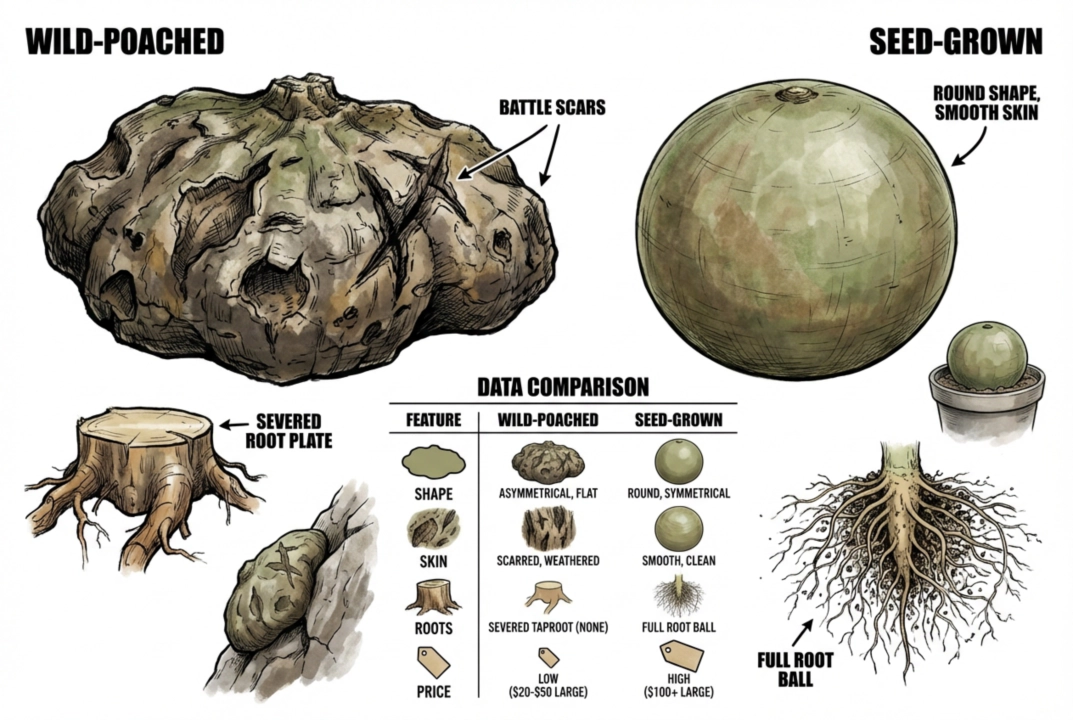
Several visual features can justify closer provenance questions. They include irregular shape, heavy scarring, and a flat cut base with few fine roots. None can identify origin on its own.
- An irregular or lopsided shape can result from growing wedged among rocks, while seed-grown plants often develop a rounder, more even form. The plant commonly sold as Stephania erecta is treated botanically as Stephania pierrei, which is native to mainland Southeast Asia including Thailand. A Thai origin is not automatically suspicious for this species. The paperwork is what matters.
- Deep gouges, healed burns, or heavy corking may reflect difficult field conditions, while smoother nursery-grown surfaces may show different patterns. Neither pattern proves origin.
- A flat, calloused base with few fine feeder roots, which can be consistent with field lifting or root surgery but is not proof of wild collection.
Is It Illegal to Buy Poached Plants Unknowingly?
In the US, the Lacey Act and related rules may restrict importing, receiving, or possessing plants taken in violation of another country’s laws, and agencies may seize suspected contraband even when a buyer says they did not know. The application depends on the current statute, facts, and agency determination.
Forfeiture and other remedies can apply differently from criminal liability, which is why a buyer should preserve records and seek current legal or agency guidance when provenance is unclear.
Do not assume an online listing or a common name establishes lawful ownership.
Criminal exposure can involve separate knowledge, intent, or due-care questions that depend on the statute and facts.
Verify a seller’s permits and shipment records with the relevant authority, because legal requirements vary by origin, destination, and species.
What About Mismatched Craft Supplies Labels?
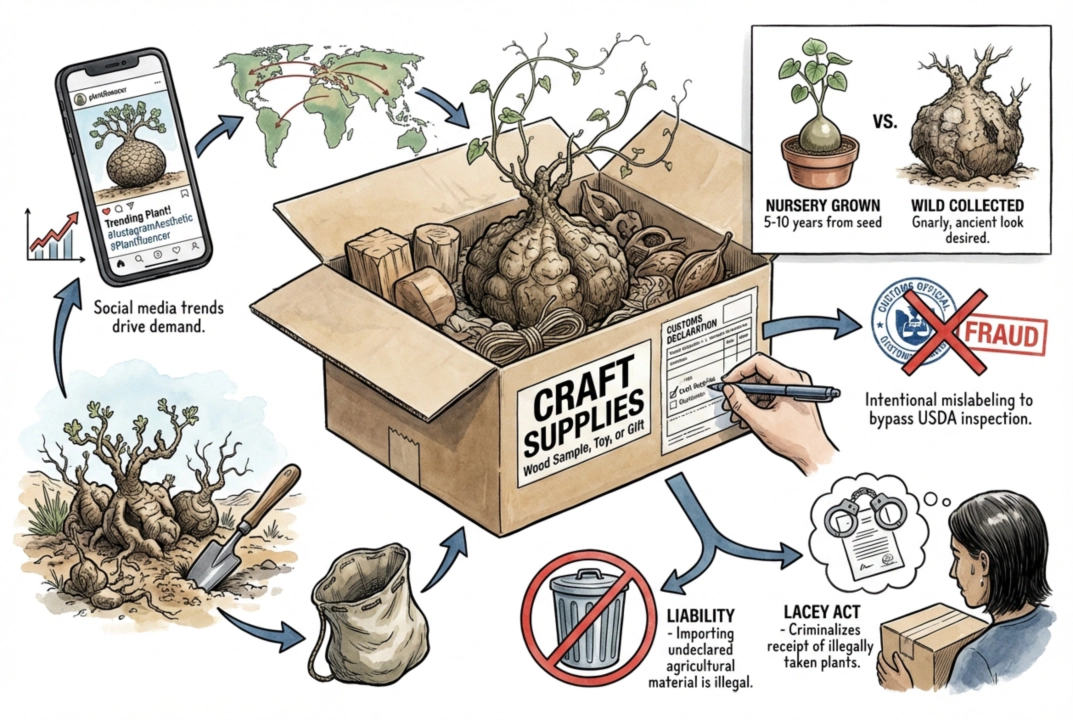
A live plant arriving under a description that does not match its contents is a serious red flag, not proof of intent by itself.
Do not accept or redistribute a shipment whose declaration appears inaccurate. Pause and ask the carrier or relevant authority how to handle it.
Mislabeling can bypass plant-health inspection and create legal exposure for the importer.
Treat a suspicious label as a reason to refuse or hold the transaction while obtaining current guidance.
Why Can Poaching Pressure Rise?
Social-media demand can amplify interest in specific species faster than documented nurseries can supply them.
Seed production and maturation can take years, while unlawful collection can remove mature plants much faster. That pressure is one factor among market prices, enforcement, local livelihoods, and habitat access.
Unlawful collection is profitable because it shifts ecological and enforcement costs away from the seller and undercuts documented growers.
Ethical Alternatives: The Slow Plant Movement
A lower-risk buying path is documented seed-grown or nursery-propagated stock from a seller willing to explain its source.
That supports traceability, although no single purchase can resolve the wider trade.
Where to Buy Ethically?
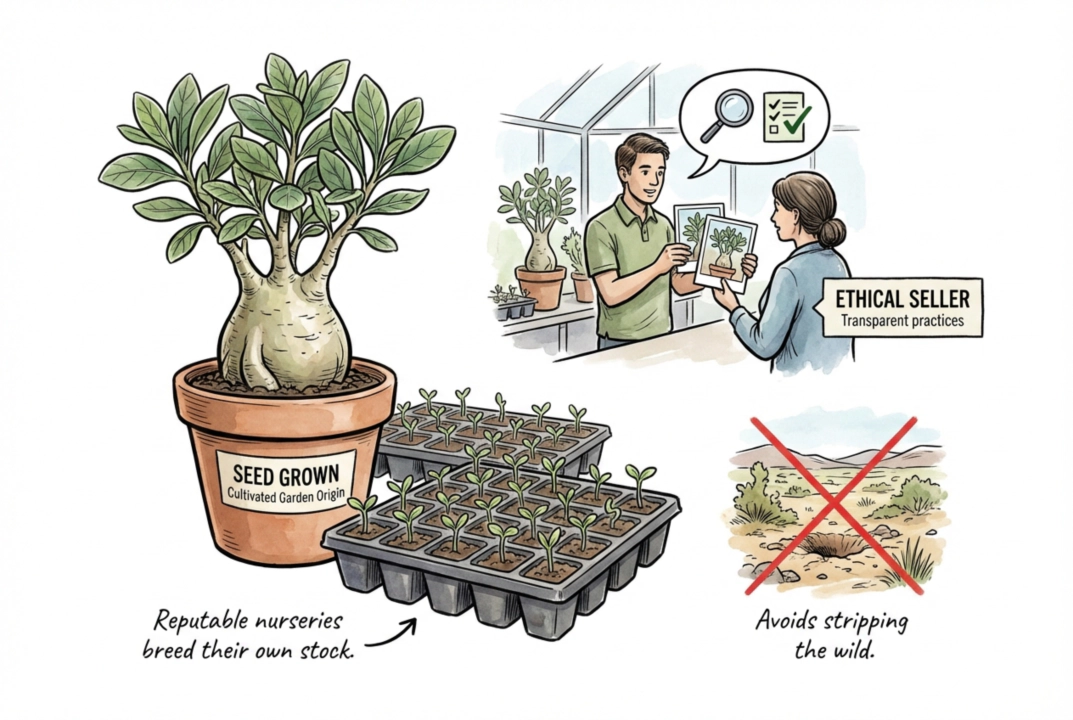
Look for sellers that state the propagation method, accepted name, source country, and any applicable permits or plant-health records. A domestic location alone is not proof of origin.
A credible seller should be able to explain whether the plant is seed-grown, cutting-grown, divided, field-grown, or legally wild-sourced, and connect that claim to records where required.
If key answers remain vague, defer the purchase rather than treating uncertainty as proof of poaching.
Before paying for a high-risk plant, I save the complete listing and record the seller, date, quantity, listed species, claimed origin, propagation claim, shipping countries, invoice number, and permit number. I save every permit page with its issuing authority, issue date, expiry date, source code, and purpose code.
I compare the species, quantity, source code, exporter, importer, and route across the listing, invoice, and permit. Any mismatch pauses the purchase, and I preserve the original files for the relevant management authority instead of judging legality from the plant’s appearance.