
Crab Cactus Care: The Science of Schlumbergera
Crab cactus care explained through the response of epiphytic Schlumbergera to an airy mix, moderated light, dry-down, and seasonal flowering cues.
Derek Kim · 2026-01-06 · Updated 2026-05-21 · 14 min read

Key Takeaways
- Treat Schlumbergera as an epiphyte, not a desert cactus. An airy mix and bright filtered light serve it far better than full-sun, dry-desert rules.
- Its gas exchange shifts with segment age and conditions, so keep moisture moderate. Use pot dry-down, root condition, and new growth as feedback rather than a fixed schedule.
- Dense, wet media starve roots of oxygen. Build a stable, open mix and tune the organic and mineral fractions to the container and room.
- Flowering needs a sustained combination of cooler stable nights, uninterrupted darkness, day length, and cultivar response. Treat these as cues, not a rigid recipe.
- Seaweed extracts are optional biostimulants, not flowering switches. Label-compliant use should supplement sound light, moisture, and timing.
Schlumbergera is often grouped with desert cacti even though many forms grow on trees or rocks in humid Brazilian forests. That difference changes how light, moisture, and potting media should be interpreted.
Use the plant's gas exchange, root-zone physics, and flowering cues to make decisions you can check in an indoor collection.
Taxonomy and Evolution: Why Crab Cactus Care Differs
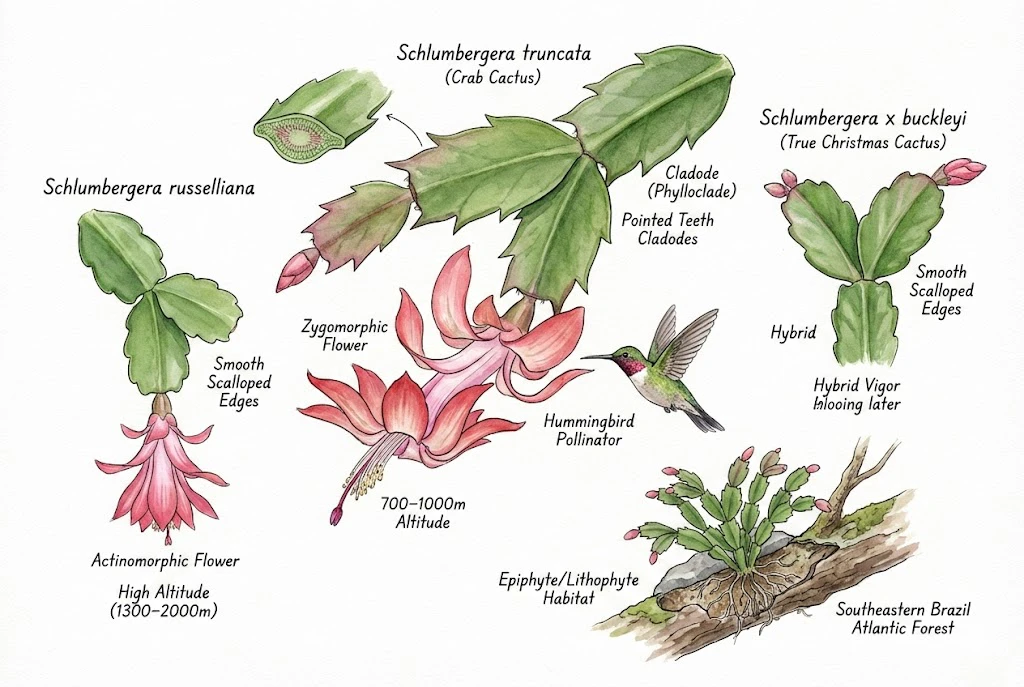
Its habitat helps explain why container care differs from that of a desert cactus. The genus Schlumbergera belongs to the tribe Rhipsalideae and includes cacti adapted to epiphytic growth on trees or lithophytic growth on rocks in parts of southeastern Brazil.
The Evolutionary Divergence of Cladodes
The absence of traditional leaves is a primary physical characteristic. The plant has replaced them with cladodes or phylloclades, flattened segmented stems that perform photosynthesis and maximize light capture in shaded environments while limiting the water loss associated with broad leaves.
Hybrids dominate the market, and cultivar or species differences can change segment shape, heat tolerance, and flowering response. Use current growth and bud formation to refine care rather than relying on a name alone.
The projections on a truncata-type plant are useful identification clues, not a complete care schedule.
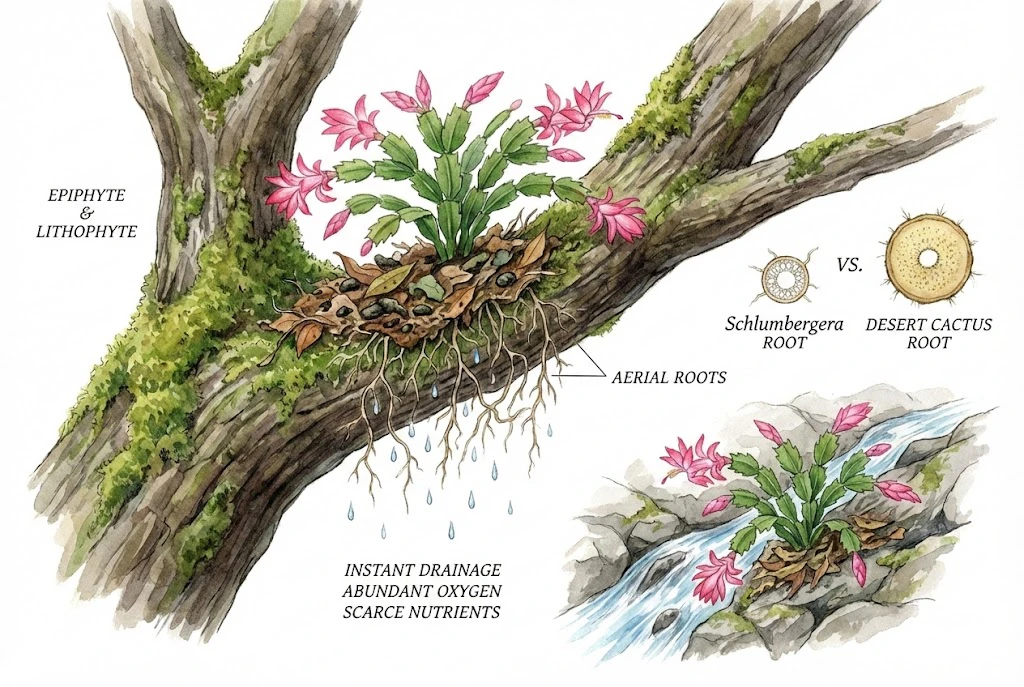
The Epiphytic Lifestyle and Root Morphology
In their natural habitat, these plants do not grow in typical soil. They grow in layers of organic debris such as decaying leaves, bird droppings, and moss found in tree branches or rock crevices, an environment that differs significantly from ground-level soil.
- Water moves through coarse debris quickly, but pockets of moss and decomposed material still retain some moisture.
- Air reaches the roots through the spaces between particles, which is different from a compact ground-soil profile.
- Nutrients arrive in small, irregular inputs from decomposing material and rainwater.
When you pot a Crab Cactus in dense, heavy soil, the compact mix removes pore spaces that an epiphytic root system depends on. Schlumbergera roots can use atmospheric and substrate moisture, but they still need oxygen and are not adapted to remaining saturated.
Low oxygen and accumulated CO2 can stress roots, with severity depending on particle size, water status, temperature, and time.
Crab Cactus Care and Metabolic Engines: Photosynthesis
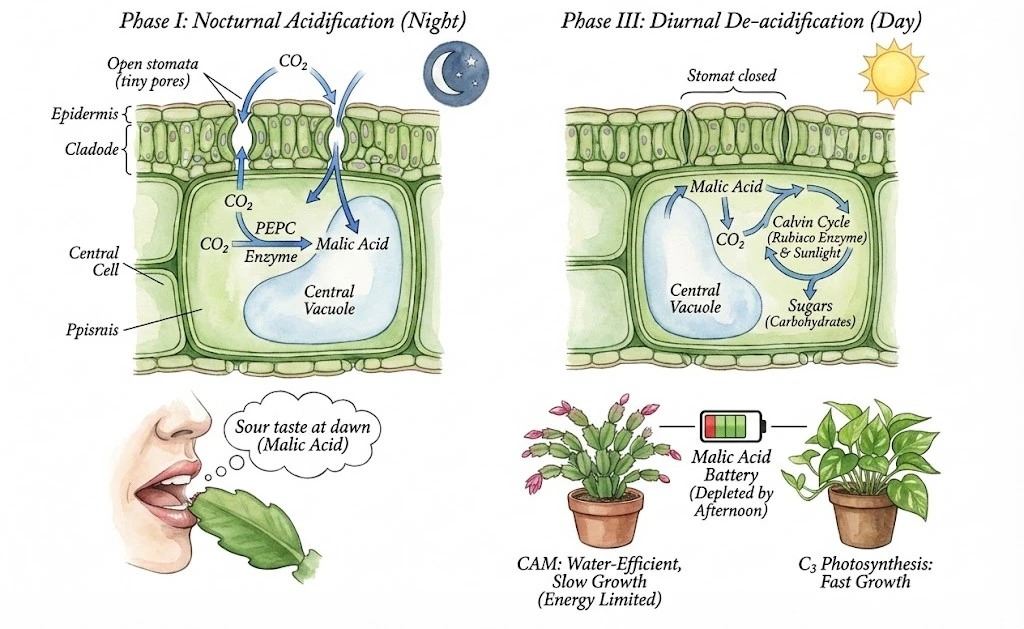
Most plants open their stomata during the day to take in CO2 and release oxygen through C3 photosynthesis. For an epiphyte in a windy environment, opening pores during the heat of the day would lead to excessive water loss.
The Crassulacean Acid Metabolism (CAM) Mechanism
Treat CAM as flexible behavior
Schlumbergera can use Crassulacean Acid Metabolism (CAM), which separates nighttime gas exchange from daytime sugar production.
It is not a rigid night-only machine. Depending on segment age and conditions, younger cladodes can behave more like ordinary C3 plants while mature ones lean more CAM. Treat nighttime carbon fixation as a general tendency rather than an absolute.
At night, when the air is cooler and more humid, the stomata open to take in CO2. The enzyme phosphoenolpyruvate carboxylase fixes that carbon into malic acid, which is stored in the central vacuoles until dawn. Researchers can track the change as titratable acidity or tissue pH, but do not taste an ornamental plant because it may carry pesticide residue, fertilizer salts, or pathogens.
When the sun comes up, the stomata close tightly. Stored malic acid is transported out of the vacuole and broken down to release CO2, which then enters the Calvin cycle to generate carbohydrates using solar energy.
This water-efficient metabolism helps explain the plant's slower growth. The practical takeaway is that this is a moderate-light plant, not a full-sun desert cactus, and extreme light or heat can add stress.
The claim that afternoon photosynthesis fully stops or that longer days cannot help is an oversimplification. With flexible C3 and CAM behavior, the plant can still fix some carbon in good conditions.
CAM-Idling: The Survival Mechanism
Recognize drought-idling as a stress state
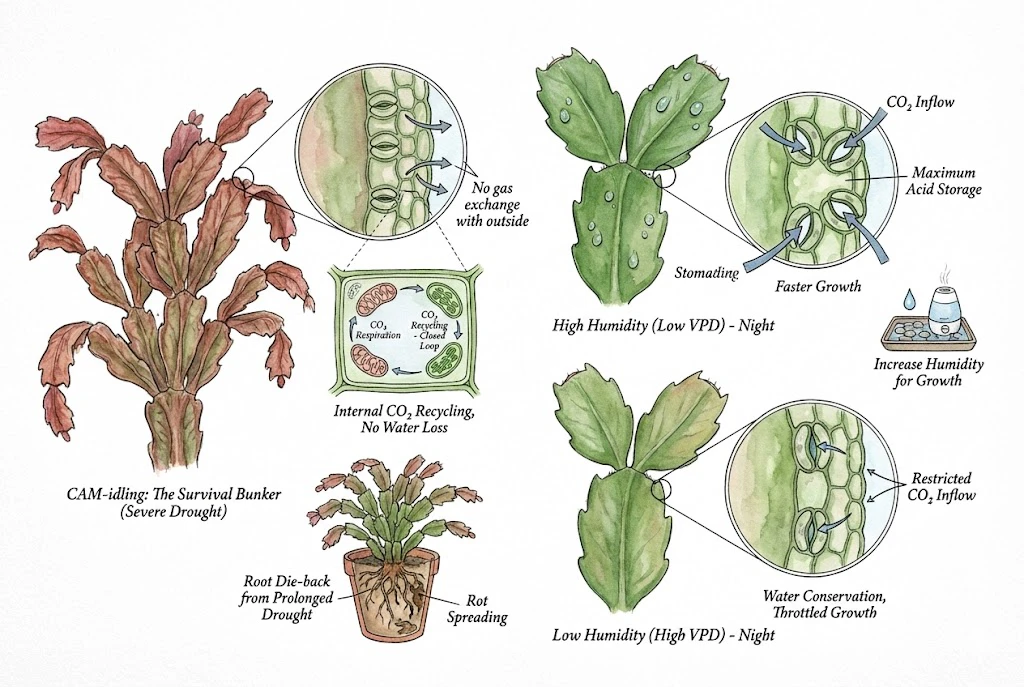
Under severe drought stress, some CAM plants can enter a low-exchange state often described as CAM-idling. Stomatal opening becomes highly restricted, and internal respiration can supply part of the CO2 used for maintenance.
This conserves water at the cost of growth. The duration and reversibility depend on species, tissue condition, and how quickly stress is relieved.
Gradual rewatering is safer after prolonged stress. A plant that has been dry for a long time may have damaged fine roots, so rewetting a compact mix can create a second problem.
Resume watering once the root zone is ready, and favor steady, moderate moisture over repeated feast-or-famine cycles.
Stomatal Conductance and Water Use Efficiency
Schlumbergera stomata can respond to Vapor Pressure Deficit (VPD), which measures the dryness of the air.
- In high humidity, stomata open wider and for longer periods at night, allowing for more CO2 storage and faster growth.
- In low humidity, stomata restrict their opening even at night to conserve water.
Very dry indoor air can slow this plant. High vapor pressure deficit can make stomata close more.
Moderately raising humidity may help, and this humid-forest plant often responds well when airflow remains adequate.
Do keep the claim bounded. More humidity may support CO2 uptake and growth in some CAM systems, but that relationship is not a measured dose-response for Schlumbergera. Over-humidifying a stagnant room can invite fungal problems, so pair humidity with airflow.
Substrate Physics: The Foundation of Crab Cactus Care
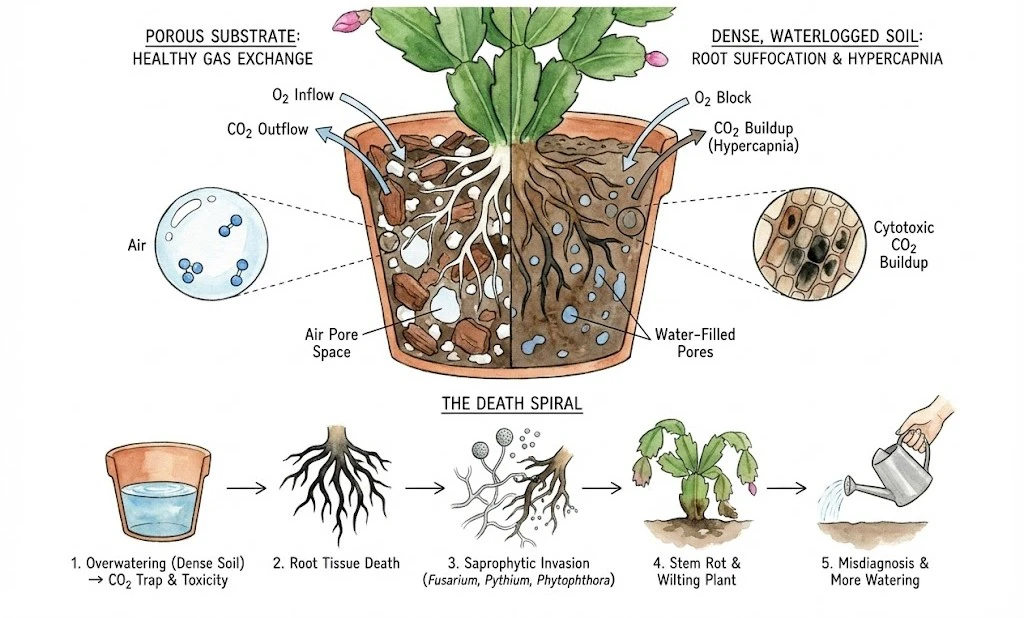
Root-zone problems are a common failure point, especially when a compact mix stays wet. Underwatering, heat, pests, and damaged roots can produce similar symptoms, so start with the physical conditions that roots need for metabolism. They consume O2 and release CO2 as a byproduct.
The Hypoxia-Hypercapnia Dynamic
In porous soil, air moves easily into the spaces between particles, supplying oxygen and removing waste CO2. In waterlogged or dense soil, those spaces fill with liquid and oxygen moves through water much more slowly.
- Hypoxia occurs when the roots suffer from a lack of oxygen.
- Hypercapnia occurs when waste CO2 accumulates around roots because gas exchange is poor.
Waterlogged, airless substrate can harm roots by limiting oxygen and allowing metabolic CO2 to accumulate. Some desert-cactus root studies found roots sensitive to high CO2, but those were different species in the lab, so treat the comparison as suggestive rather than proven for Schlumbergera.
Watch for a saturated, poorly aerated root zone
Damaged roots in that environment are vulnerable to pathogens such as Fusarium and Pythium, which can exploit weakened tissue rather than acting only as harmless clean-up crews.
When the plant wilts, adding more water without checking the root zone can accelerate the rot. Confirm moisture, oxygen, and root condition before increasing irrigation.
Designing the Perfect Substrate
Build air-filled porosity into the finished mix
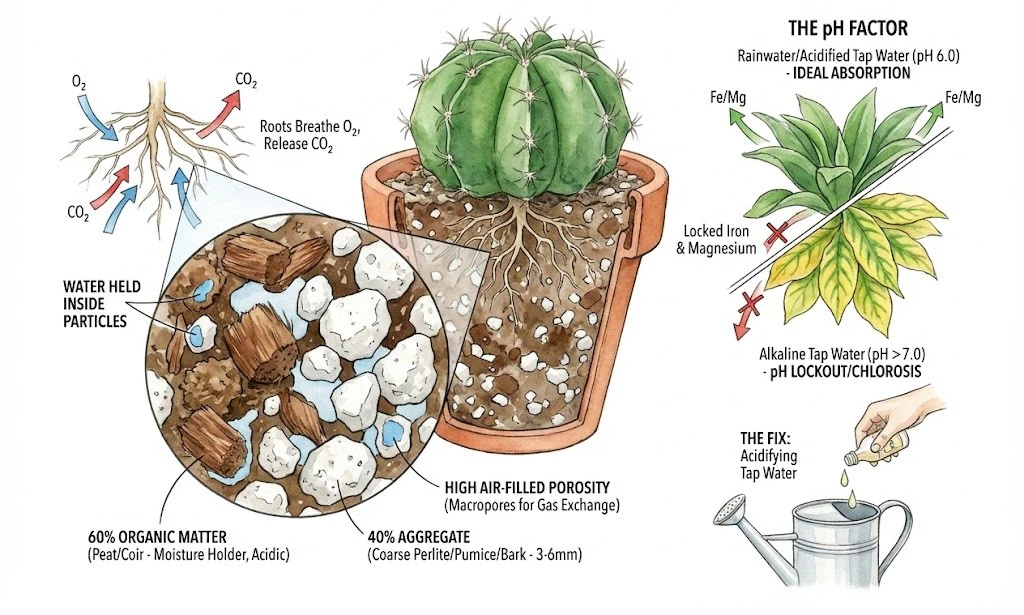
To approximate natural conditions, build the substrate with open air-filled porosity while retaining some moisture inside particles. A practical starting point combines a moisture-holding organic component with enough coarse aggregate to keep air spaces open.
Peat moss, coco coir, or fine bark can supply moisture retention, while coarse perlite, pumice, or orchid bark helps maintain gas exchange. Small sand particles can fill air gaps, so the useful grade depends on pot size, the other ingredients, humidity, and observed dry-down.
Horticultural pumice is one easy aggregate to test. It can hold some water in its pores while keeping air gaps open. Choose its fraction from the finished mix and observed dry-down, then blend until a watered test pot drains predictably and remains airy.
Supply nutrition separately from pumice
Pumice contributes little nutrition, so feeding still depends on active growth and the product label. Schlumbergera generally tolerates a mildly acidic organic mix, but there is no need to chase a precise pH without evidence of a water-alkalinity problem. Hard, high-alkalinity water can push mix pH up and lock out nutrients such as iron, while soft water with a high pH may do little. Test alkalinity, meaning bicarbonate load, as well as pH. Rainwater or distilled water sidesteps the problem. If you acidify tap water, measure toward the target range rather than dosing blindly because low-alkalinity water can over-acidify a small pot.
Flowering Physiology: Advanced Crab Cactus Care for Blooms
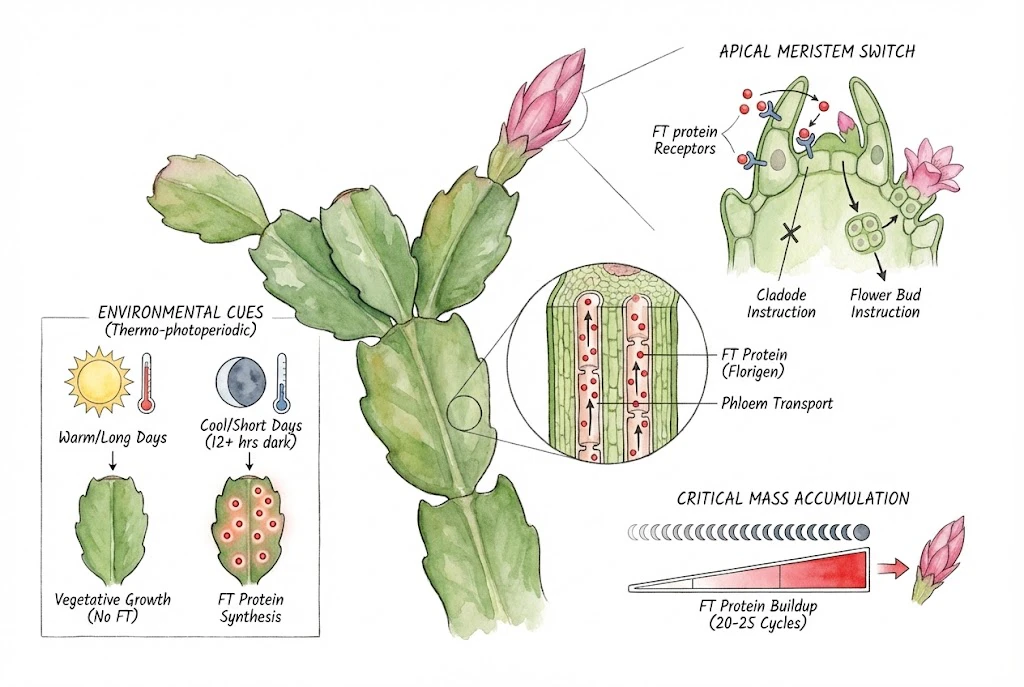
While growing foliage is straightforward, supporting a full bloom requires keeping the plant’s seasonal cues aligned. The plant is thermo-photoperiodic, using both temperature and day length as cues to begin flowering.
The Biological Trigger: FLOWERING LOCUS T (FT)
Keep gene evidence in context
FLOWERING LOCUS T (FT) is part of the flowering-signaling network studied across plants, but the exact contribution and timing in Schlumbergera cultivars is not a complete care formula. Environmental cues are integrated through several signals before a bud develops.
The FT protein is synthesized in the cladodes when specific environmental conditions are met, then moves through the vascular system to the growing tips. There it helps reprogram meristem cells to form flower buds instead of new stem segments.
Flowering is cumulative and needs the right conditions sustained long enough for the cultivar to respond.
Use several weeks of stable seasonal cues as a practical starting point, then adjust from bud formation and the plant's history rather than treating a cycle count as a molecular threshold.
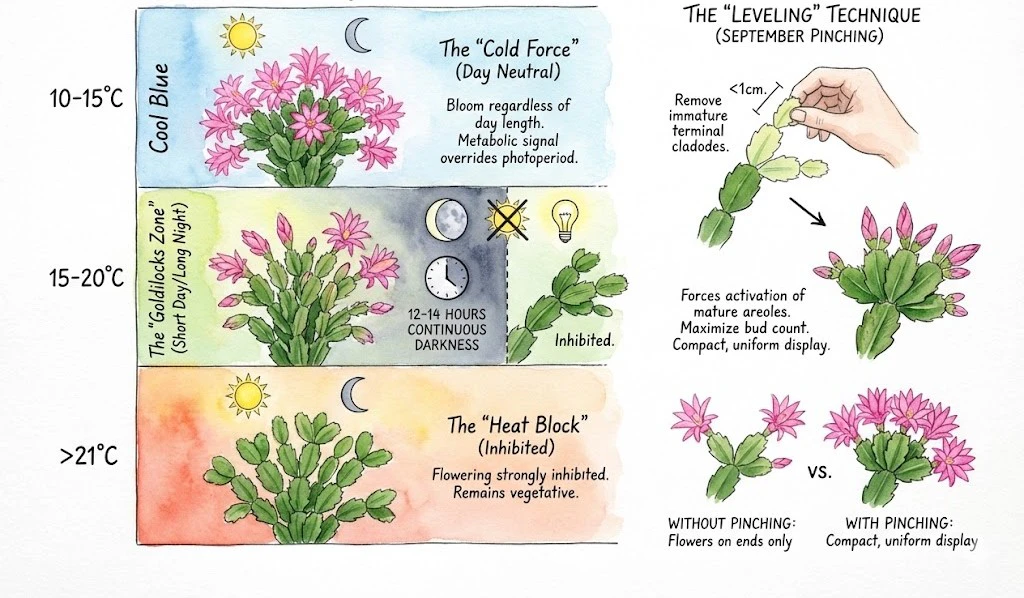
The Temperature-Photoperiod Interaction Matrix
| Observed condition | Useful cue | How to respond |
|---|---|---|
| Cooler seasonal nights | May support bud initiation | Keep the plant stable and avoid abrupt temperature or watering swings. |
| Moderate nights with long nights | Often supports flowering in responsive cultivars | Protect the dark period from room or fixture interruptions. |
| Warm nights or active heat | Can delay or reduce flowering | Reduce heat load and reassess light, moisture, and cultivar expectations. |
The general pattern is more useful than a universal number. Cooler seasonal nights and uninterrupted darkness often help, while excessive warmth can delay buds.
Cultivars differ, and very low or very high temperatures can both suppress flowering.
The Leveling Technique
Use leveling only as an optional technique
Commercial growers may remove the smallest terminal cladodes before the flowering cycle because very young segments may be less responsive to flowering cues and can divert resources away from mature segments.
This may shift resources toward older, established segments and create a more uniform display, but cultivar response varies and the technique is not necessary for every home plant.
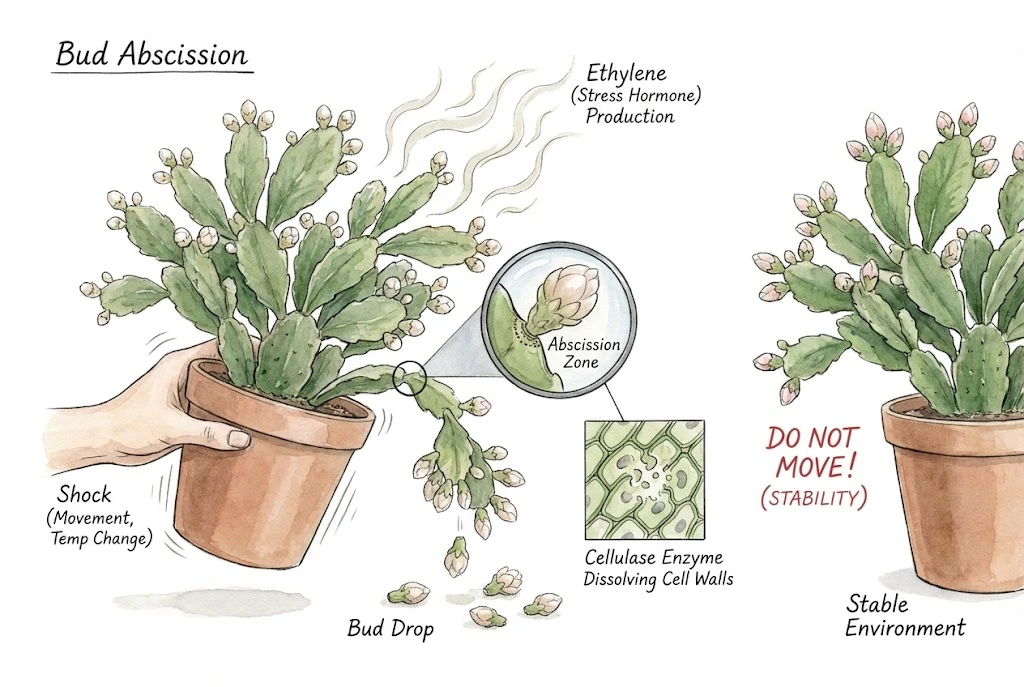
Bud Abscission: The Ethylene Threat
Protect the stable bud window
Once buds have formed, they are highly sensitive to environmental changes. Moving the plant during this stage can lead to sudden bud loss, and drop can follow physical shock, temperature shifts, drying, root stress, or other changes. Ethylene is one part of the signaling picture, not a diagnosis by itself.
Once buds are visible, keep the growing conditions stable. Keep light, temperature, watering, and placement as consistent as practical, and move the plant only when necessary.
When I first see buds, I photograph the plant with the same pot-rim mark facing the camera and note its shelf position, nearby window or lamp, and last watering. Every unavoidable move, room-temperature change, or light-schedule shift then becomes a log entry. That simple record is more useful than reconstructing a week of ordinary household changes after buds begin to fall.
If buds drop, I map where on the plant it started and compare the timing with the most recent change. I do not assume that one event proved the cause, but the pattern helps me avoid adding fertilizer, pruning, or another move while the plant is already under stress. It also gives me a better starting point for the next flowering season.
Hormonal Manipulation in Crab Cactus Care: Cytokinins
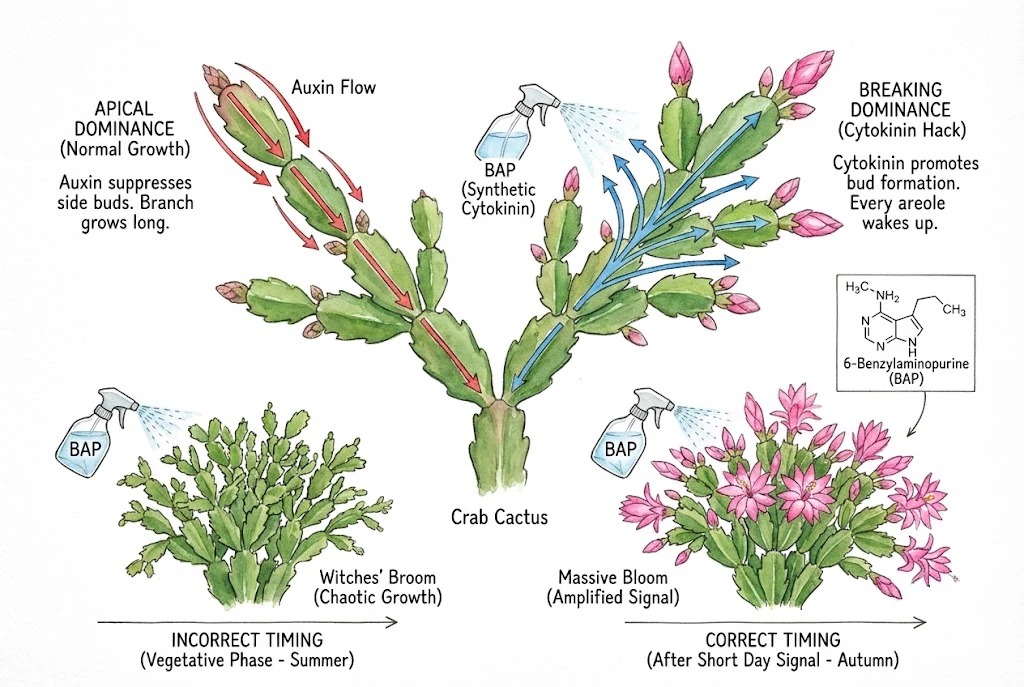
Advanced cultivation involves managing the plant's internal hormones, specifically Auxins and Cytokinins.
Breaking Apical Dominance
The growing tip of a branch produces auxin, which moves downward and suppresses side buds as the plant grows toward light. Reducing that effect is one possible way to support bud outgrowth, but it is not required for every plant and does not guarantee more blooms. Cytokinins promote cell division and bud formation, while research on 6-benzylaminopurine shows that outgrowth can change under particular cultivar, dose, and photoperiod conditions rather than producing a guaranteed increase in flowers at home.
Trials in Schlumbergera have reported changes in cladode or bud production under particular BA treatments, while higher or mistimed doses can alter flower form. Cytokinin timing is therefore an experimental variable rather than a default home-care step. If you try it, follow the product label, wear gloves, avoid overuse, and expect cultivar-to-cultivar variation.
The Natural Alternative: Seaweed Extracts
Use seaweed as a supplement, not a switch
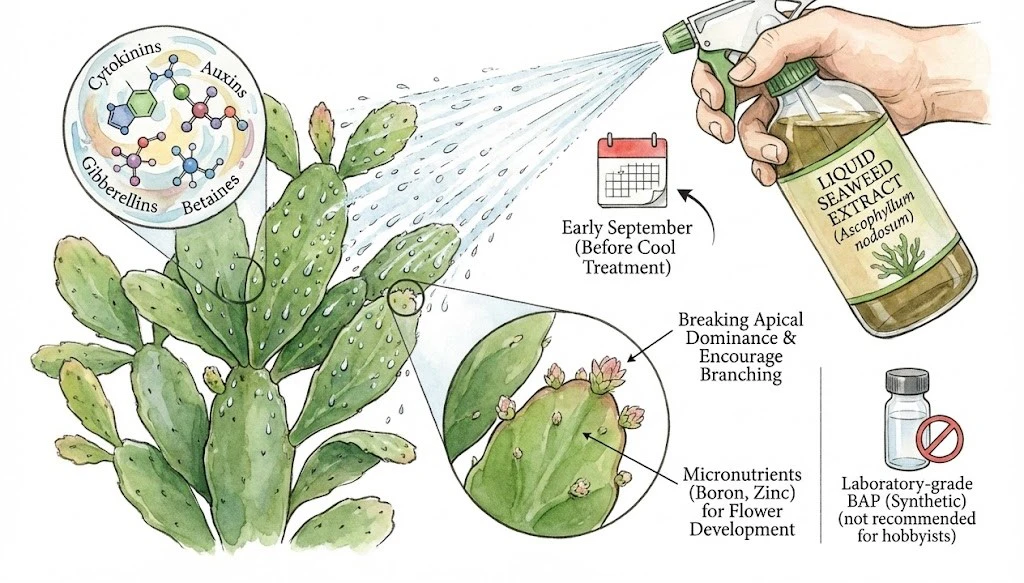
Liquid seaweed extract is a common alternative to synthetic hormones because it contains natural cytokinins and other compounds that can act as biological stimulants.
Seaweed extracts contain variable mixtures of minerals and bioactive compounds and may support general growth when used according to the label, but timing and response depend on the product and plant. A liquid seaweed extract is one example of a label-directed supplement during active growth. Check the current formulation, apply only at the label rate, and stop if the foliage reacts.
Seaweed is a gentle biostimulant, not a flowering switch, so it cannot replace appropriate temperature, darkness, light, and root care.
Light Physics: A Critical Aspect of Crab Cactus Care
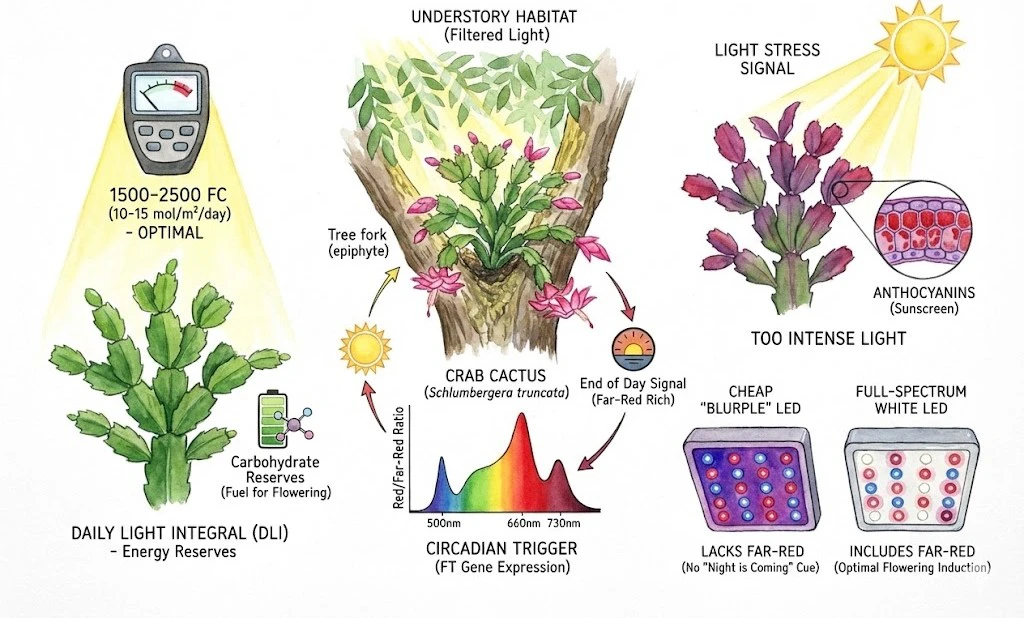
While it is a cactus, it does not require direct, intense sunlight. In its natural habitat, the plant receives filtered light through the forest canopy.
The Daily Light Integral (DLI)
Light provides the energy required to store the carbohydrates needed for flowering. If the plant receives too little light during summer, it may have fewer reserves for autumn flowering even when temperature and dark-period cues are suitable.
Schlumbergera generally prefers bright filtered light, with the useful level depending on season, glass, cultivar, and acclimation history.
When exposure or heat is excessive, cladodes may turn purple or red as part of a stress response. Color alone does not prove reduced photosynthesis.
The Red/Far-Red Ratio
For those using grow lights, the light spectrum is one factor among intensity, coverage, timing, and acclimation.
Plants can use spectral and timing cues, but the relative contribution of red, far-red, intensity, and day length varies by species and fixture.
For home care, a stable light period and a genuinely dark night are more dependable than trying to tune a precise red/far-red ratio.
Choose a fixture that covers the plant evenly, and keep its schedule consistent while monitoring bud formation and foliage color.
Integrated Pest Management in Crab Cactus Care
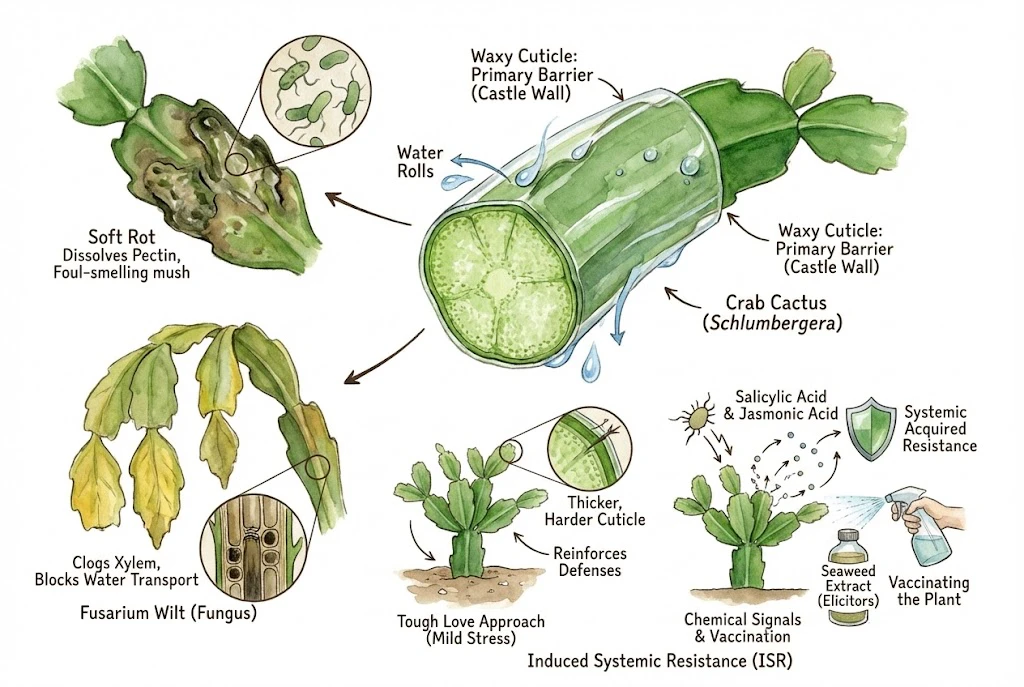
The outer layer of the plant serves as its primary defense against water loss and infection.
The Bacterial and Fungal Pressure
Soft rot, Fusarium, and other opportunistic problems can affect Schlumbergera, especially when tissue is damaged or the root zone stays wet.
Soft rot may cause rapid tissue collapse, while vascular disease can produce wilt even when the substrate is moist. These signs overlap with root loss, so inspect before treating.
Induced Systemic Resistance (ISR)
Plants adjust defense responses to their environment, but mild stress is not a reliable treatment for disease.
Keep the root zone from staying saturated. Provide airflow and let the root zone reach an appropriate dry-down before watering again.
Do not withhold water from a wilted plant merely to force hardening.
When a plant is attacked, it releases signaling molecules to activate defense responses throughout its tissue.
Seaweed extracts may influence stress signaling in some systems, but evidence and products vary. They should remain optional and label-directed.
Conclusion: The Cultivation Protocol for Crab Cactus Care
The useful care decisions follow from the plant's epiphytic habitat, flexible gas exchange, root-zone oxygen needs, and seasonal flowering cues. Schlumbergera truncata is adapted to a specific environmental niche and thrives with consistent conditions rather than excessive care or total neglect.
- Use a stable, airy mix whose moisture retention matches the container and room, and verify that it drains without staying saturated.
- Provide bright filtered light during growth and protect the dark period when preparing a responsive plant for flowering.
- Use stable, seasonally cooler nights when possible, while avoiding abrupt chilling or heat.
- Feed only during active growth and treat seaweed or growth regulators as optional, label-directed inputs.
- Once buds develop, keep placement, light, temperature, and watering as consistent as practical.
Use these principles as a feedback loop. Inspect the roots and new growth, compare dry-down across seasons, and adjust one variable at a time.