
USDA Hardiness Zones and Caudex Plants
Use USDA zones as climate context rather than a survival guarantee. Combine the map with freeze duration, moisture, acclimation, species evidence, forecast, and measured microclimate conditions.
Nathan Brooks · 2026-02-18 · Updated 2026-03-22 · 8 min read
Key Takeaways
- Use a USDA hardiness zone as one climate input, not a survival guarantee for a caudex plant. Combine it with a short-term forecast, local temperature readings, species evidence, and the plant's condition.
- Keep cold and moisture as separate risks. Moist soil can release heat on a frost night, but long saturation still cuts root oxygen and invites rot. Winter watering balances freeze exposure against oxygen loss.
- Move a tropical caudex outside only on nights that suit the species, and keep watching for a late freeze. The useful margin varies with duration, wind, acclimation, and plant water status.
- A mostly mineral mix improves drainage and re-aeration, but it cannot raise a plant's inherited cold tolerance. It will not make a tender species safe in a freeze.
- Treat a cover as a limited buffer for calm, clear radiational-frost nights, not a substitute for bringing a tender plant indoors. Fabric, ground contact, wind, and duration all change its effect.
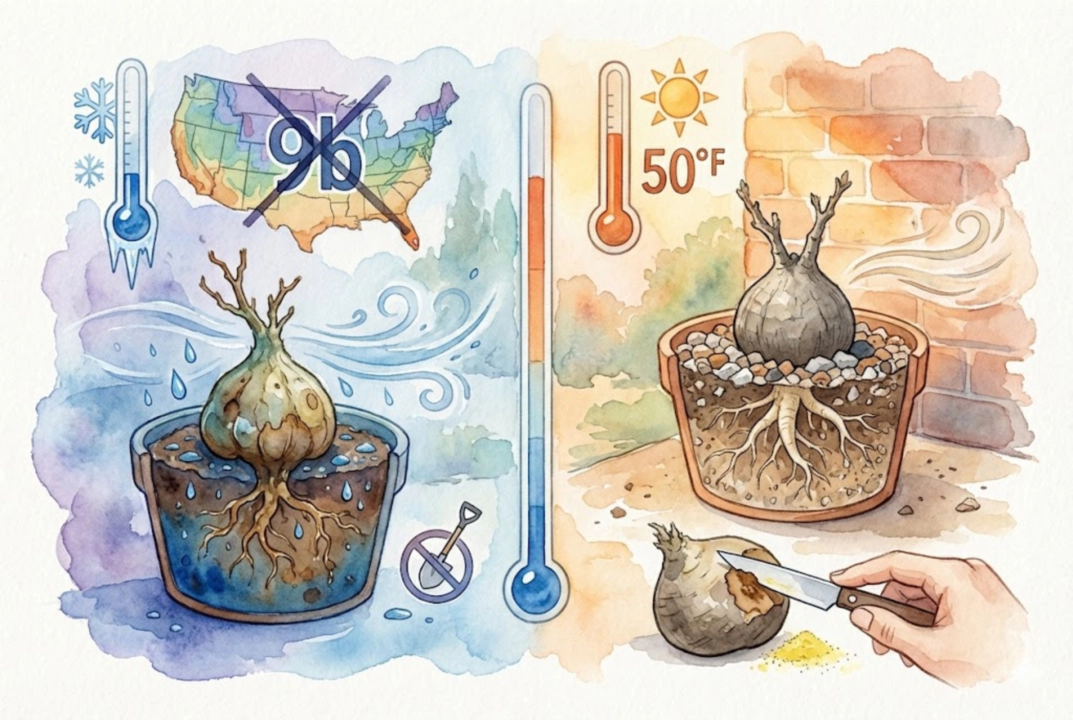
The map describes a long-term temperature statistic for a location. It does not describe the duration of a freeze, the moisture around the roots, the wind, the tissue temperature, or how the individual plant was acclimated. Combine the zone with a short-term forecast, local temperature readings, species evidence, and the plant’s current condition.
What does the USDA Map actually measure?
Read the Statistic Precisely
The USDA Plant Hardiness Zone Map uses the average annual extreme minimum temperature for each location over the 1991–2020 period.
Zone 9b represents a 25–30 °F range in that statistic. It does not promise that a future winter will stay inside that range, and it does not measure cold duration, wind, soil moisture, or plant acclimation.
Separate map updates from weather volatility
The 2023 update moved some locations into warmer zones, but zone changes also reflect the observation period, station coverage, and mapping methods.
A warmer zone label is not by itself a measure of increasing year-to-year volatility. Use the current forecast and local records when a real cold event is approaching.
Why Does Cold, Wet Soil Increase Risk?
Do Not Use a Cooling Shortcut
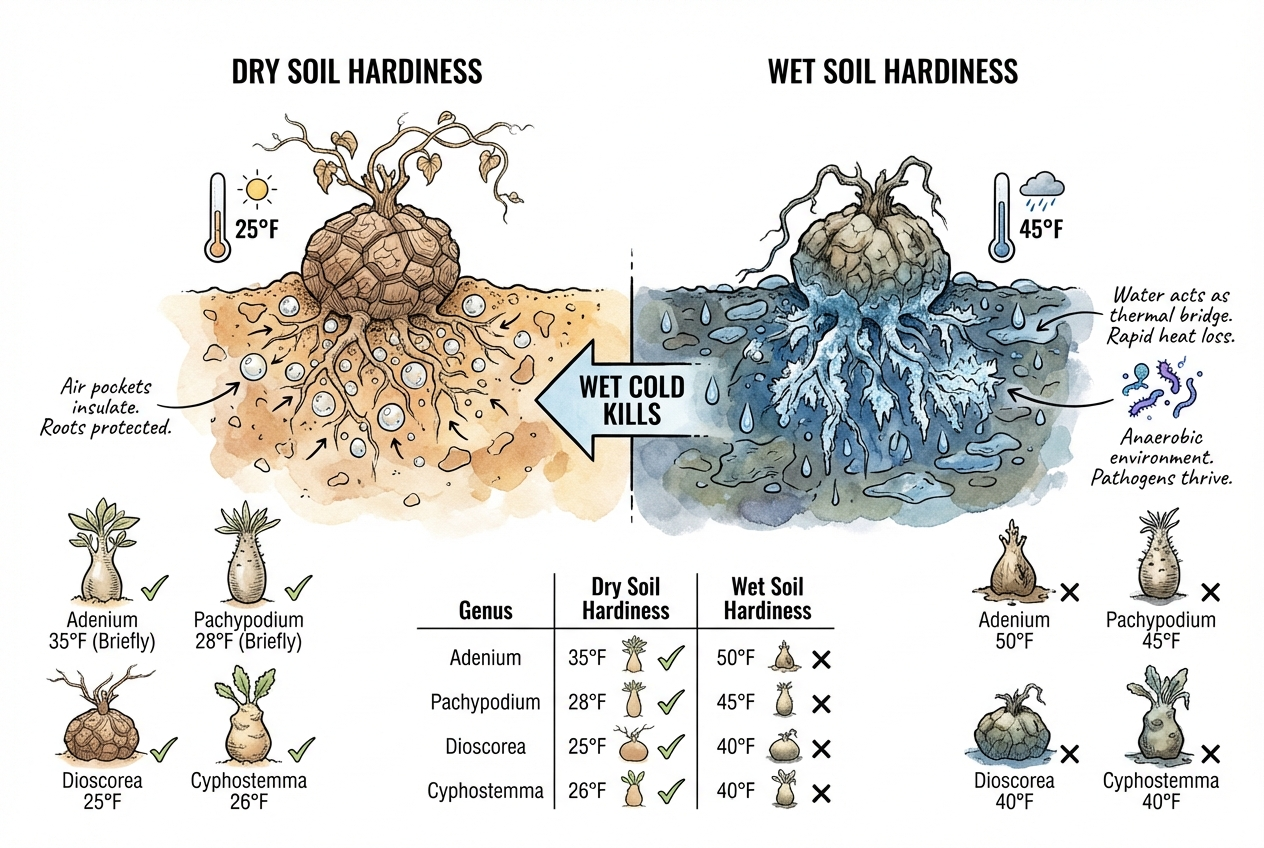
Water conducts and stores heat differently from dry air-filled media. On a clear, calm frost night, moist ground can release stored heat and reduce the local temperature drop.
That observation does not make saturated soil safe for roots, and it does not support a universal rule that wet soil rapidly chills every caudex.
Separate oxygen stress from freeze injury
Waterlogged media can reduce oxygen around roots and create conditions that favor root disease. Pythium and Phytophthora are water molds, and their temperature responses vary by species. There is no single temperature at which every saturated pot becomes a confirmed Pythium infection.
Use directional guidance, not survival temperatures
A dry, dormant plant may come through a cold event better than a plant kept wet, partly because the wet root zone carries a separate rot risk.
The outcome still depends on species, cultivar, acclimation, exposure duration, wind, tissue temperature, root temperature, and plant water status.
A genus-wide wet-versus-dry survival table would imply precision the evidence does not provide.
Keep winter watering conditional
Let the plant’s activity, pot weight, root condition, and drying rate guide winter water. Protect genuinely tender tissue from freezing even when the substrate is dry, and do not assume that a dry pot is safe at any temperature.
Which species can handle my zone?
Which Caudex Plants Are Chilling-Sensitive?
Use a conservative warm-night margin
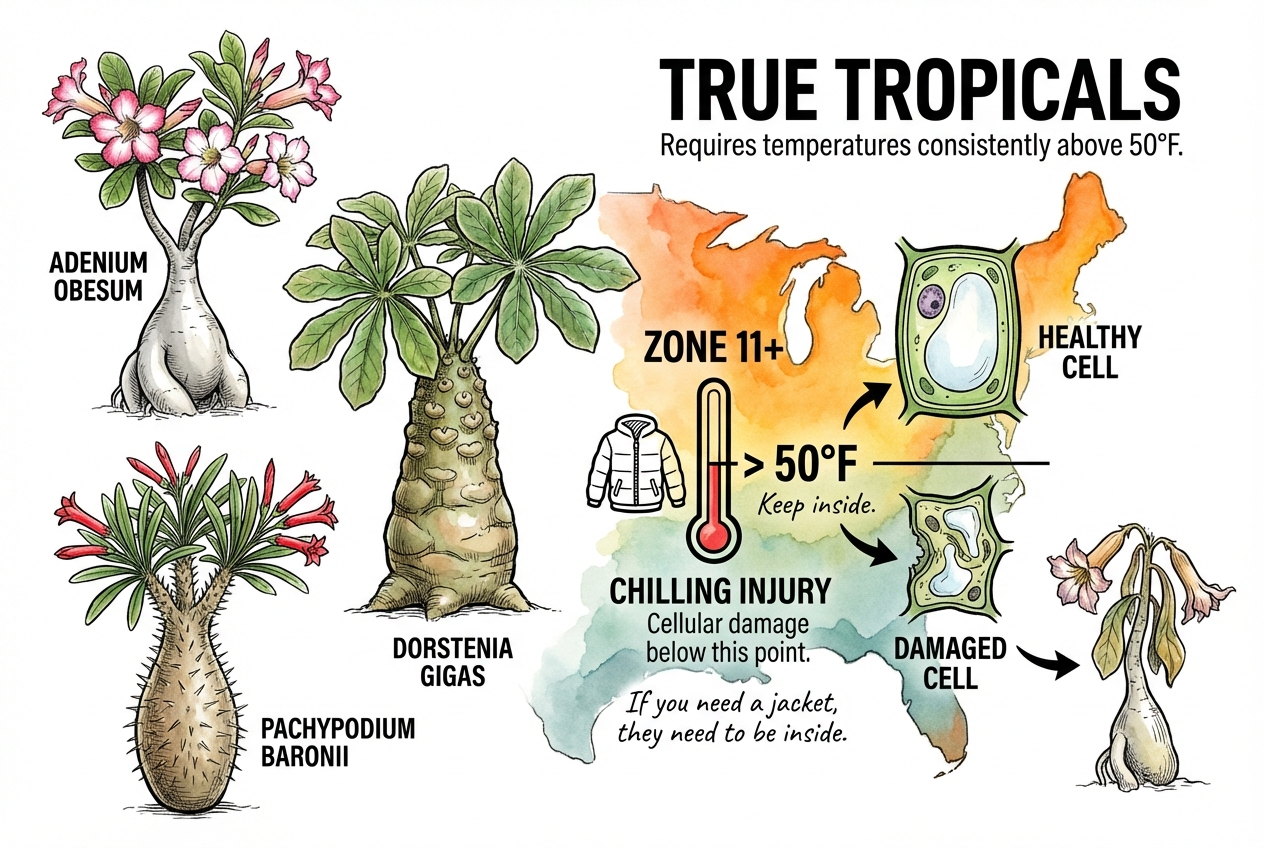
Some tropical caudex plants can suffer chilling injury above the freezing point. Examples often treated cautiously include Adenium obesum, Dorstenia gigas, and Pachypodium baronii.
This is a starting group for careful observation, not a universal temperature table.
Keep tropical caudex plants comfortably above the conditions that produce chilling symptoms, bring them inside before forecast cold, and adjust the margin to species, duration, acclimation, and tissue response.
Which Plants May Tolerate Brief Frost?
Treat frost tolerance as conditional
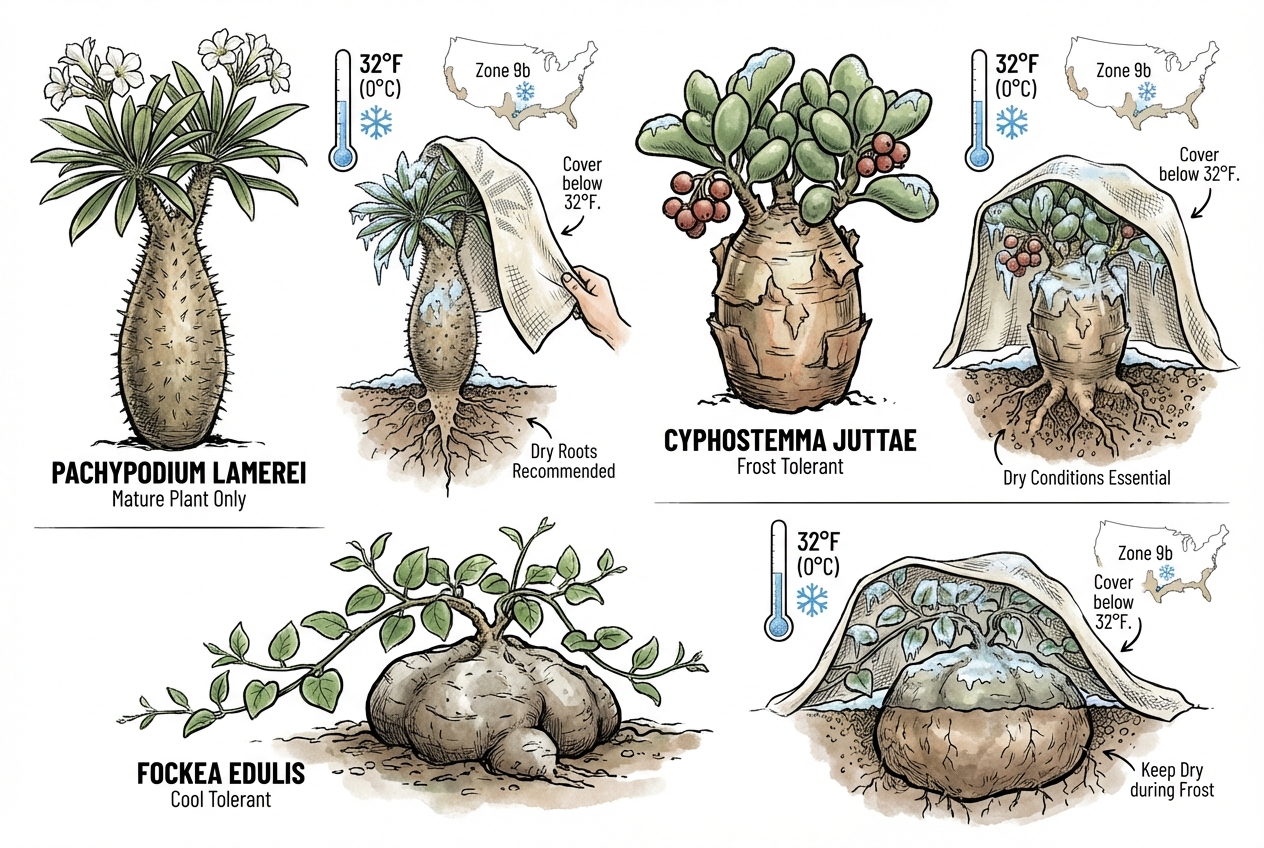
Pachypodium lamerei, Cyphostemma juttae, and Fockea edulis are sometimes discussed as more cool-tolerant caudiciforms.
Their presence in a Zone 9b collection does not establish a safe outdoor threshold. Pachypodium in particular is often described as very frost tender and may be better moved indoors for winter.
Use a cover only as a short buffer
If a documented, relatively hardy plant remains outside, keep the root zone from staying saturated and cover it during a calm radiational frost.
A lightweight horticultural frost cloth can provide a small temporary buffer when it is installed correctly.
Ground contact, wind, duration, and fabric weight determine the result. A cover cannot offset a prolonged or severe freeze.
Which Species Have Some Cool-Weather Tolerance?
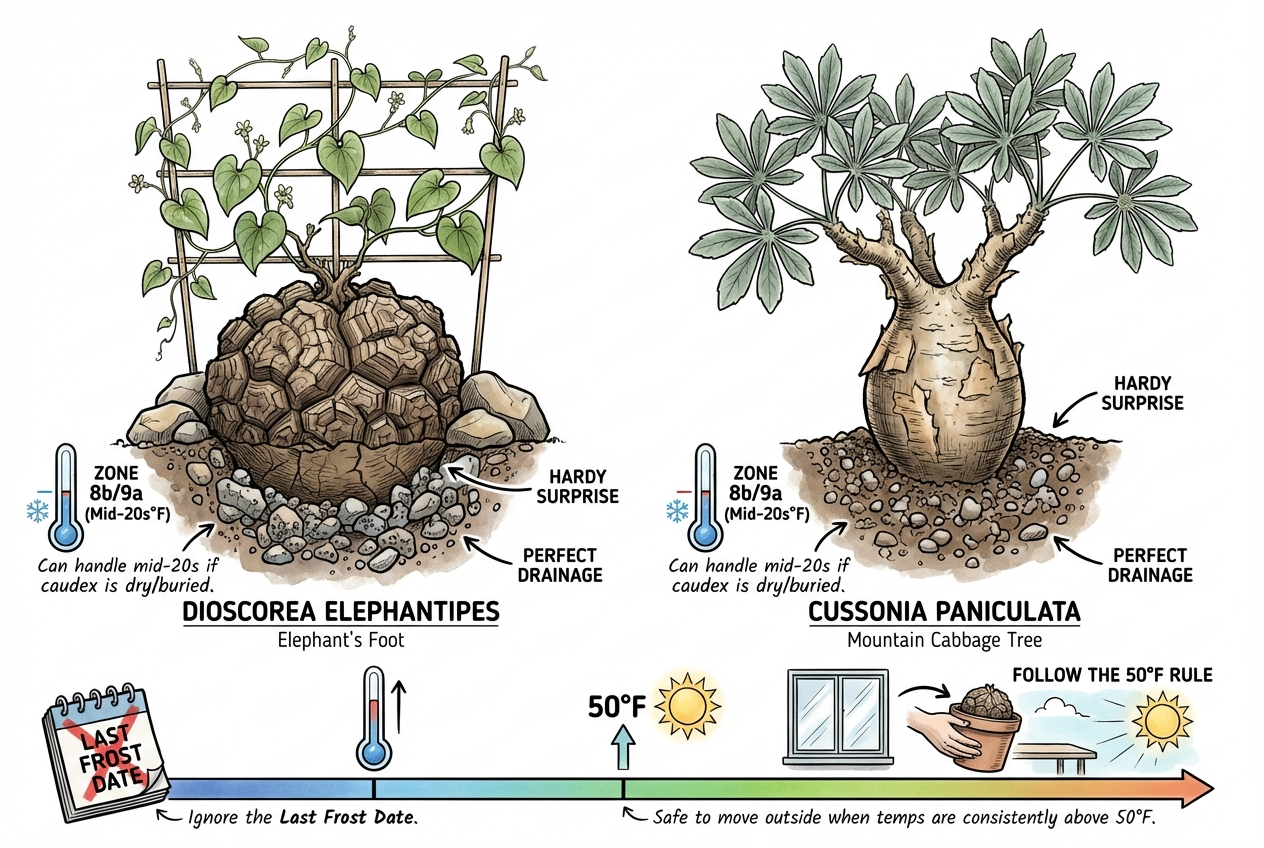
Do not turn a species note into a threshold
Dioscorea elephantipes and Cussonia paniculata have published descriptions that support some cool-weather tolerance.
Use the documented species information and the local forecast rather than assigning both plants one dry, buried, or Zone 8 rule.
When Can I Move Plants Outside?
Use Both Statistics and Forecast
Last-frost dates and warm-night conditions answer different questions. Use the local frost statistic to track freeze risk, then use the forecast, soil temperature, plant activity, and species tolerance to decide whether outdoor growth is appropriate.
What does the Last Frost Date not tell you?
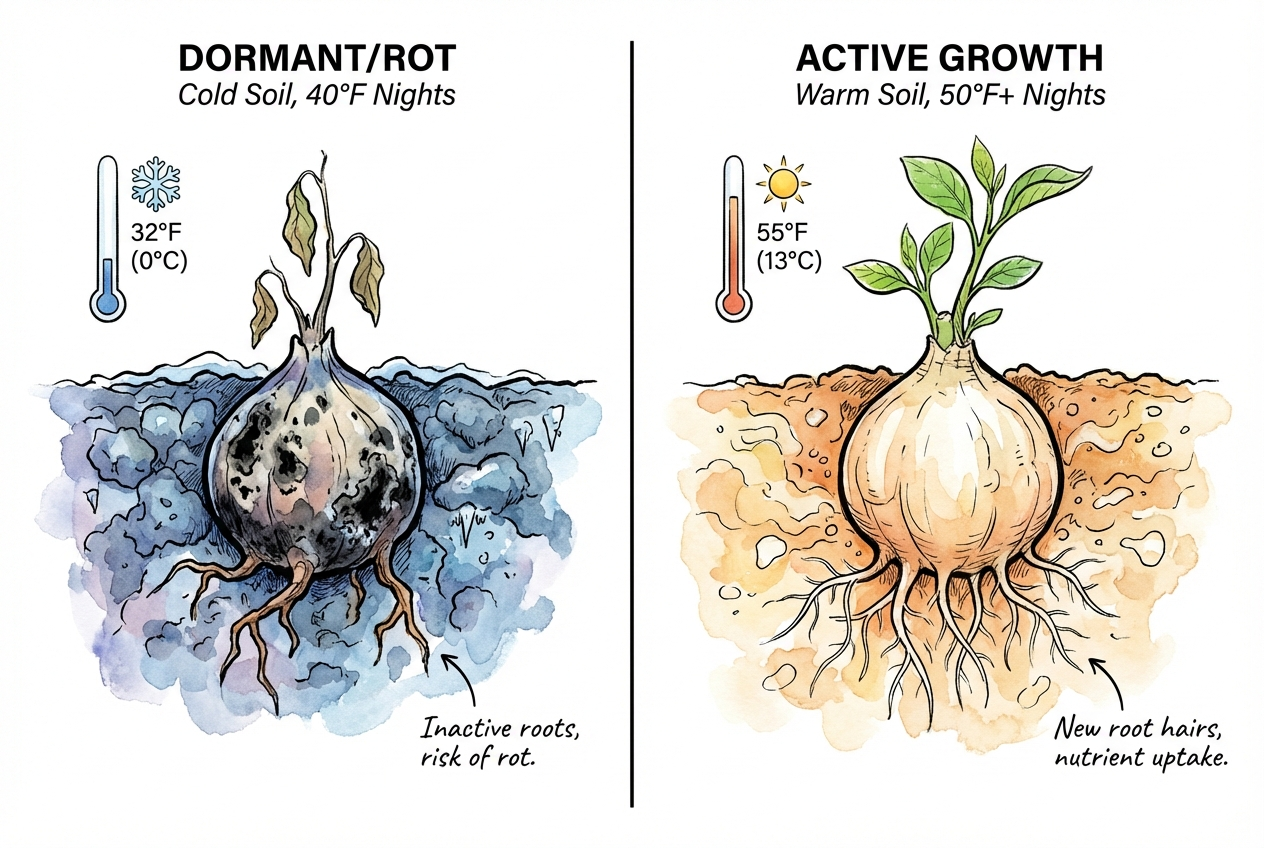
The last-frost date estimates when the statistical risk of a temperature near 32 °F declines. It does not tell you whether nights are warm enough for a tropical caudex to grow instead of stalling.
Use the date to avoid likely freezes and wait for conditions that suit the species. Chilly nights above freezing may slow a plant without automatically causing rot.
How do I stop them from burning?
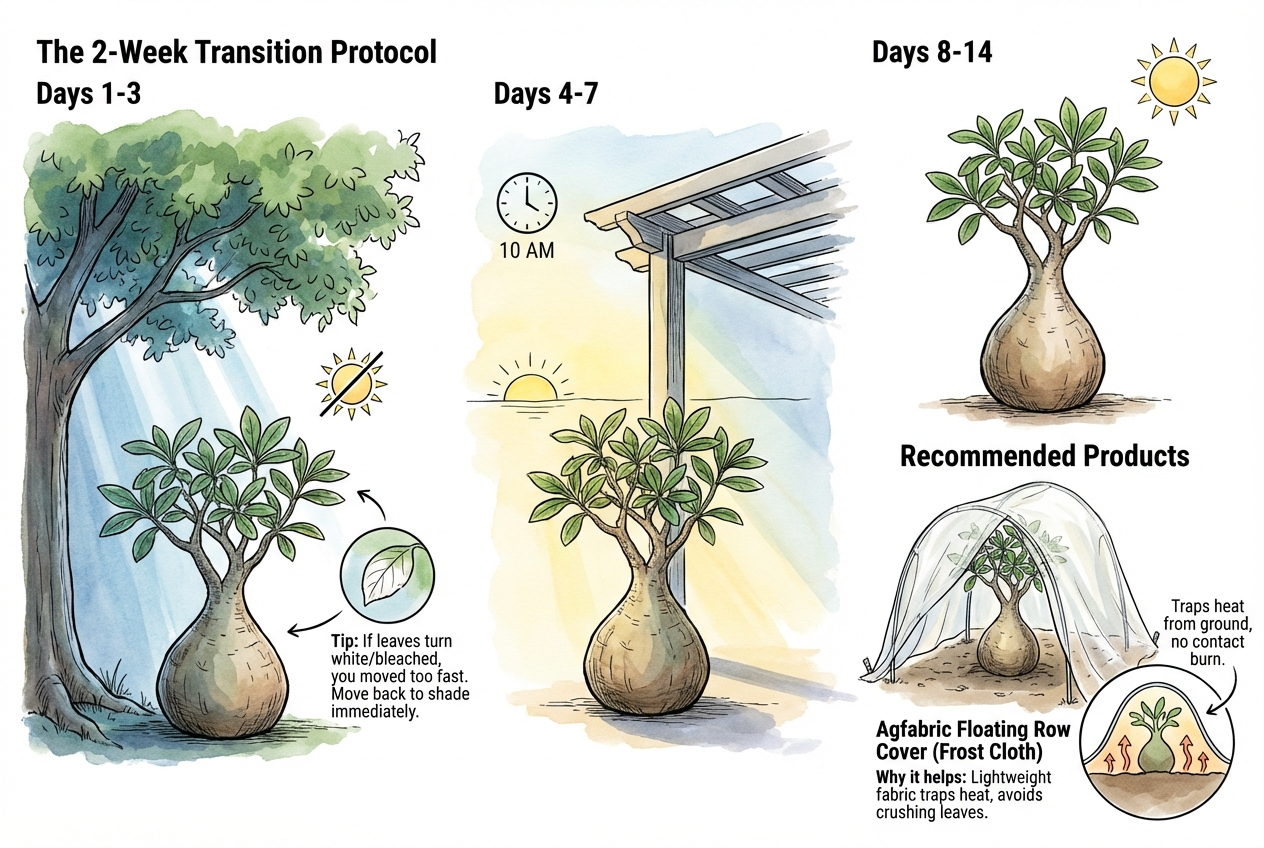
Stage the first exposure
Leaves grown indoors are not prepared for direct outdoor sun, so change the exposure in stages.
- Begin outdoors in bright shade or filtered light.
- Add a short period of gentle morning sun when the plant remains stable.
- Increase exposure gradually toward the amount that the species and site can use.
Stop when the plant shows stress
The endpoint is not always full sun. Match it to the species, latitude, season, and measured response. If leaves bleach or turn white, return to shade and allow the plant to recover because sunburned succulent tissue may not repair.
Can Microclimates Extend My Margin?
Expect a Local Buffer, Not a New Zone
Microclimates can reduce exposure during some radiational-frost nights, but they do not reliably move a tender plant into a new hardiness zone. Measure the actual site when the decision matters.
How much heat does a wall provide?
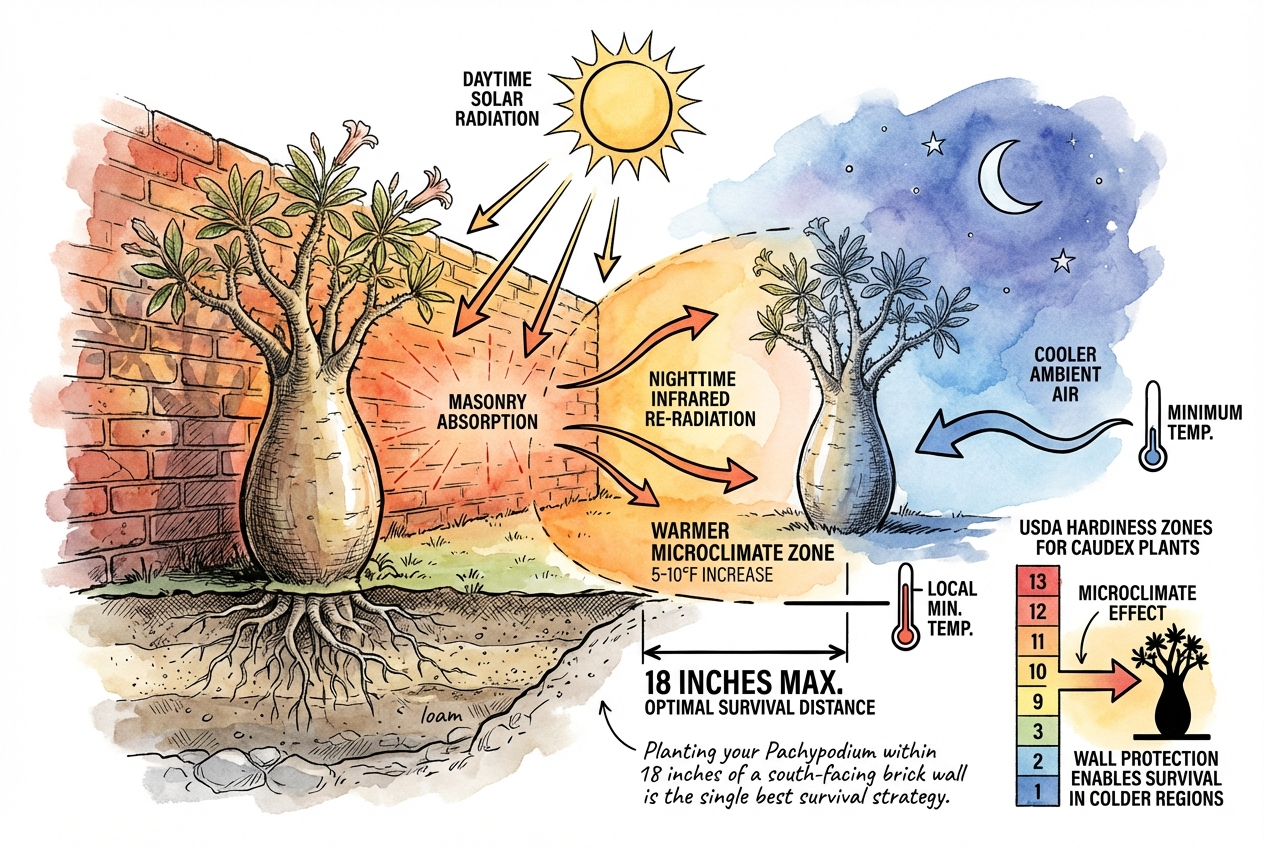
Measure the wall effect
A sun-facing masonry wall can absorb heat during the day and release some of it at night.
The result varies with wall mass, color, aspect, distance, cloud, and wind. In the Northern Hemisphere a sun-facing wall is commonly south-facing, while the solar logic reverses in the Southern Hemisphere.
Treat any temperature benefit as a local measurement rather than a fixed number.
Does cold air really flow?
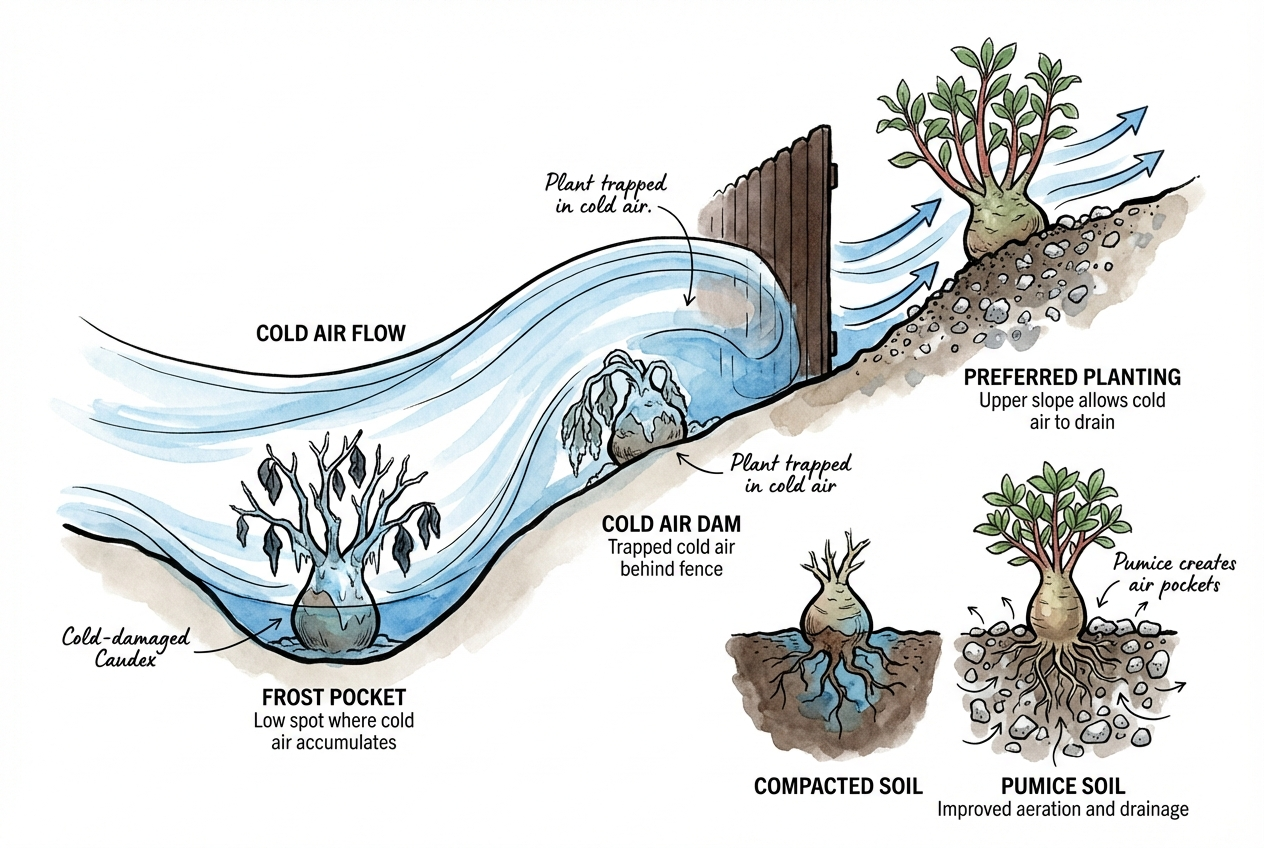
Limit the drainage rule to calm nights
On clear, calm nights, dense cold air can drain downhill and collect in low spots or behind barriers.
Windy advective freezes are different because mixing and continuing cold-air movement can dominate. Avoid obvious frost pockets, but do not treat an upper-slope position as a guaranteed protection zone.
The Role of Soil and Air
Use the Substrate to Protect Oxygen
A gritty mix can help a root zone drain and re-aerate after watering. That can reduce rot risk in cold, wet weather, but it does not raise the plant’s actual cold tolerance or replace protection for a tender species.
How can pumice help?
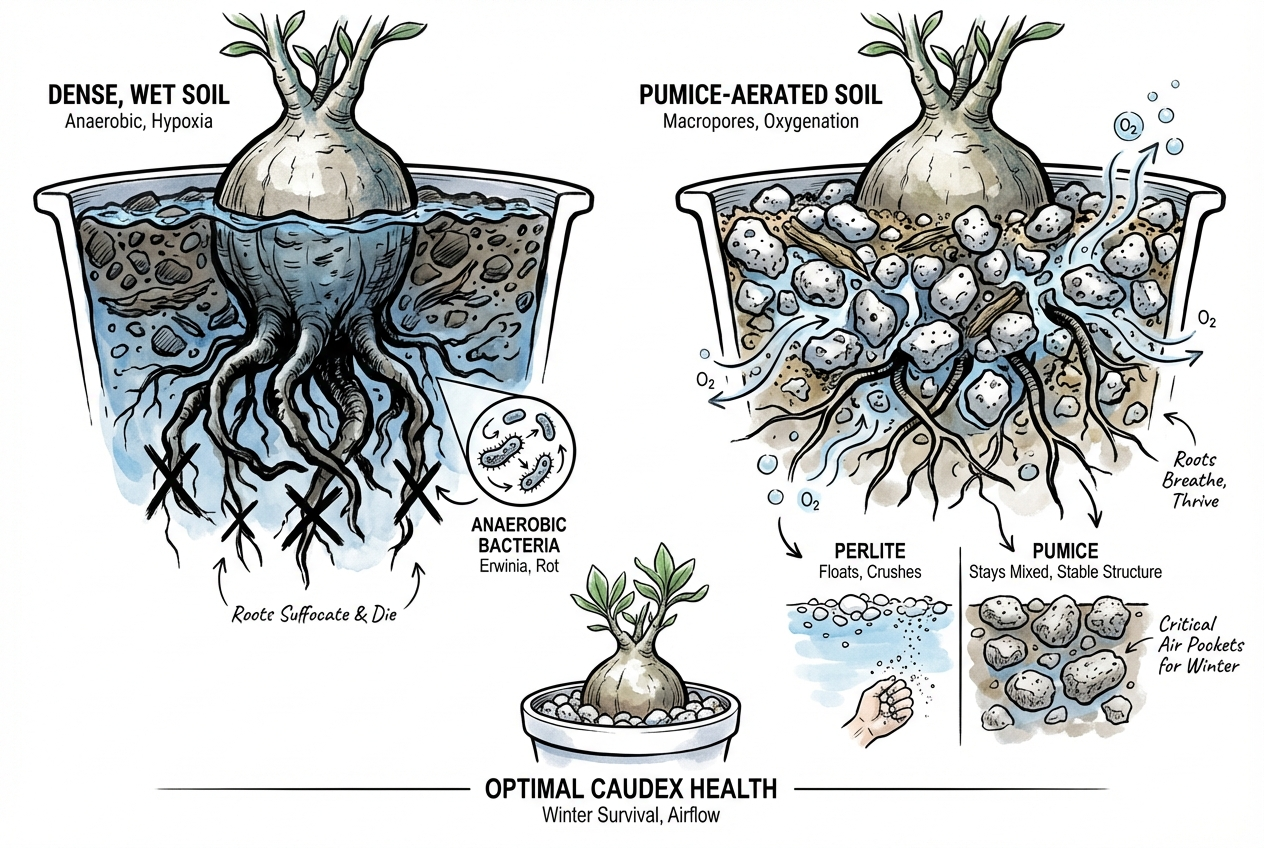
What pumice can improve
Horticultural pumice is a porous aggregate that can add stable coarse particles and air space when the selected grade suits the pot.
A dense, water-retentive mix may stay wet and low in oxygen, while a suitable mineral structure can drain and re-aerate more predictably.
What pumice cannot guarantee
Pumice also holds some water in its pores, and any mix can lose air when it stays saturated.
Particle size, pot depth, organic fraction, root mass, climate, and irrigation determine the result. Root and crown problems can involve water molds, fungi, bacteria, or noninfectious hypoxia, so do not treat a material name as a pathogen diagnosis.
Troubleshooting Rot and Cold
Wait Before Cutting After a Cold Event
If a plant looks rough after a cold night, record the temperature history and isolate it from avoidable stress.
Cold damage and rot can require different responses, so do not make an immediate cut based on softness alone.
After an unexpected cold night, I tag the pot with five-minute air readings from a shielded logger at caudex height and photograph each affected surface. The sensor never touches glass, the pot, a shelf, or a heat source. I save data from sunset until two hours after sunrise because the full interval preserves both the minimum and the duration of cold exposure.
That record gives me something more useful than a hardiness-zone label when symptoms appear later. It cannot identify rot or freeze injury on its own, but it keeps the recorded overnight minimum and cold-duration window beside the tissue observations.
Is it Rot or just Frozen?
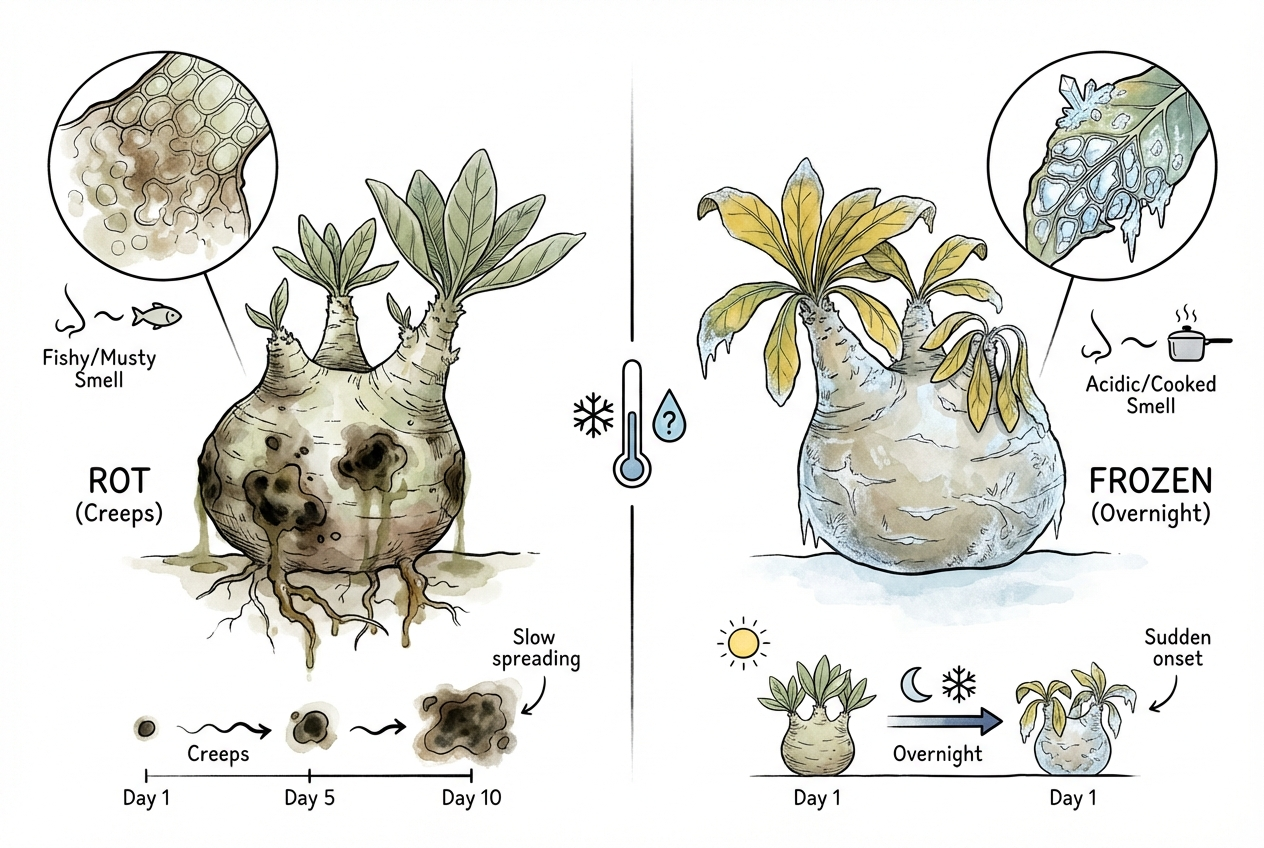
Expect overlapping symptoms
Freeze injury and rot can both produce soft, dark, or water-soaked tissue, and they can occur together.
The timing, tissue distribution, root condition, recent moisture, and temperature history are more useful than a smell rule.
Unpot and inspect the roots and base when the evidence warrants it.
How do I respond?
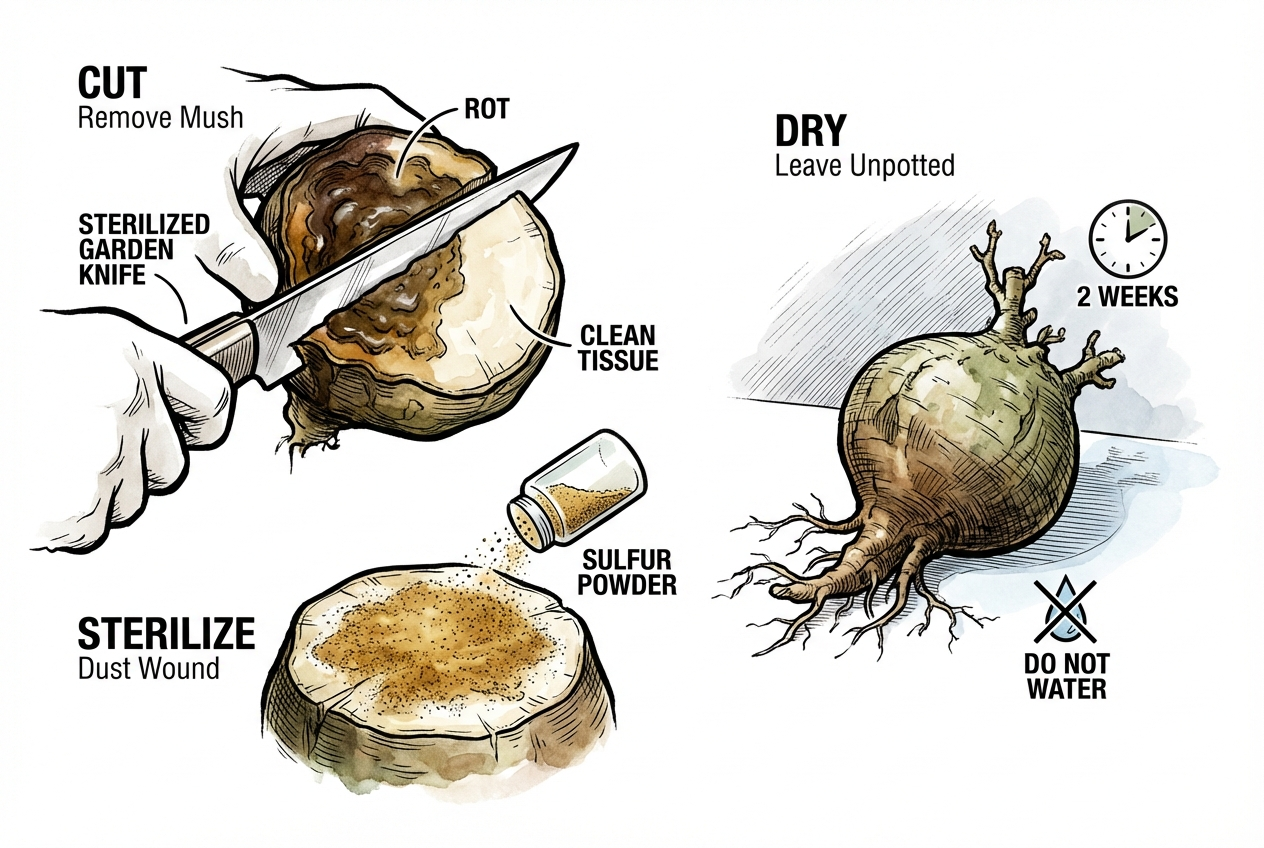
For frost damage
For frost damage, wait for warming and new growth before cutting unless an immediate safety issue requires action.
For confirmed rot
For confirmed rot, remove only clearly rotten tissue after inspection and isolate the plant.
- Wear suitable gloves and splash eye protection when sap may irritate skin or eyes, and keep children and pets away from the work area.
- Use a sharp blade, clean debris from it, and disinfect between cuts according to the selected product or tool guidance.
- Remove only tissue that is clearly compromised, contain the waste, and clean the pot and work surface before reuse.
- Let the wound and remaining roots dry according to plant condition, temperature, humidity, and the extent of the cut rather than following a fixed countdown.
Reassess instead of following a fixed schedule
A labeled fungicide may be appropriate only when its current label covers the plant, site, pathogen, and method. Household cinnamon is not a proven wound sterilant. If damage is extensive or systemic, isolation and disposal may be safer than repeated cutting.